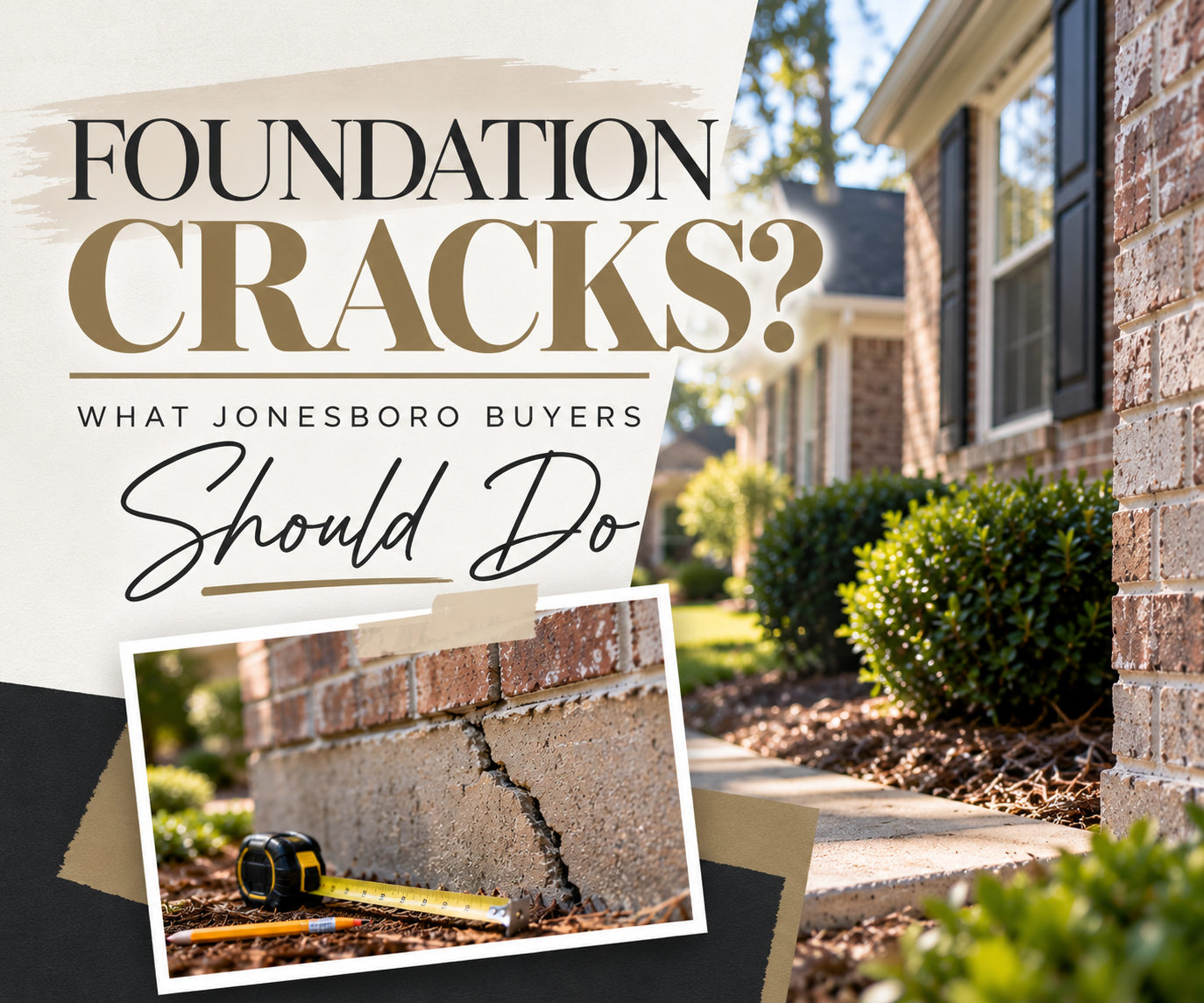
Foundation Cracks? What Jonesboro Buyers Should Do
What should you do if the Jonesboro home you want to buy has foundation cracks?
Hairline cracks are often cosmetic, but wide, stair-step, or growing cracks need a structural engineer's opinion before your Jonesboro inspection period ends.
You found the house. The price works, the layout works, and then the inspector points at a crack in the foundation wall. Your stomach drops, and the next question is the one that matters: is this a deal-ender or a negotiating point?
The honest answer is that it depends on the crack, the cause, and whether it is still moving. At NEA Realtor Group, Trenton Hoggard and Tim Ray walk buyers through this decision regularly, and the goal is always the same: get the facts before your inspection window closes, then decide with a clear head. If you are earlier in the process, our Jonesboro home buying guide lays out the full path from offer to closing.
This post covers what separates a cosmetic crack from a structural one, what to do in the days after you see it, and the options you have once you know what you are dealing with.
Not Every Crack Is a Foundation Problem
Almost every house has some cracking. Concrete shrinks as it cures, and homes settle a little in their first years. Small hairline cracks are usually normal settling, according to Redfin's guide to structural inspections.
The cracks that deserve attention look different. They are wider, they run in a pattern, or they come with other symptoms elsewhere in the house.
Usually less worrying
- Thin hairline cracks in poured concrete that are roughly the same width along their length
- Cracks in a garage slab or a concrete porch, which are common and often cosmetic
- Small cracks in drywall corners with no other symptoms nearby
Worth a closer look
- Stair-step cracks that follow the mortar joints in brick or block
- Cracks that are wider at one end than the other
- Horizontal cracks, or a wall that bows or bulges
- Cracks you can fit a coin into
- Any crack with stains, dampness, or white mineral residue around it
A single crack tells you little. A crack plus a sloping floor plus a sticking door tells you a lot more. That is why a good walkthrough looks at the whole house, not just the one spot the inspector flagged.
Warning Signs Beyond the Wall Itself
Foundations move, and the house usually shows it somewhere other than the foundation. When you tour a home you are serious about, check for these:
- Doors and windows that stick, rub, or will not latch
- Floors that slope or feel uneven when you walk across a room
- Gaps between the wall and the ceiling, or between trim and the wall
- Cracks that run diagonally from the corners of doors and windows
- Brick veneer with separation, missing mortar, or cracks near the corners
- Standing water or soil that slopes toward the house instead of away from it
- Rot, rust, or termite damage on beams and supports (see the crawl space notes below)
Take photos and note the locations. If you later need to negotiate, a clear record of what you saw and when you saw it helps. A simple tip: put a dated pencil mark at each end of a crack you are worried about. If you get a second visit before closing, you can see whether it moved.
What to Do in Your Inspection Window
Your inspection period is short, so the order of operations matters. Here is how we suggest buyers handle it.
1. Get the full general inspection first
Start with a thorough inspection so the cracks are seen in context. Our guide to what happens during a home inspection in Jonesboro explains what to expect. In Northeast Arkansas, a standard single-family inspection typically runs about $500 to $1,000, and larger homes or add-on services can push that higher.
Ask the inspector to note the type of foundation (slab, crawl space, or pier and beam), the location and width of each crack, and any related symptoms inside the house.
2. Ask whether a structural engineer should look
A home inspector can tell you something looks off. A licensed structural engineer can tell you why it is happening and how serious it is. Redfin's guide puts a typical structural inspection at $350 to $1,500 nationally, with about $550 as an average for homebuyers. Local pricing varies, so ask for a quote before you schedule.
If the inspector flags stair-step cracking, a bowing wall, or notable movement, an engineer's report is usually worth the fee. It turns a vague worry into a written opinion you can negotiate with or act on.
3. Check the drainage and moisture picture
Many foundation concerns trace back to water. Look at gutters, downspouts, and how the soil slopes around the house. If water sits against the foundation, the engineer or a contractor may recommend drainage fixes that cost far less than structural repair.
4. Request repair quotes if the engineer recommends work
A written scope of work and a contractor estimate give you real numbers. Without them, negotiations turn into guesses. We recommend getting more than one estimate when the work is significant. We do not recommend specific companies, so ask around and verify licenses and insurance yourself.
5. Keep the calendar in mind
Engineers and contractors can take days to schedule. If your inspection period is close to ending, talk to us early about whether an extension is reasonable. Do not let the deadline pass quietly while you wait for a report.
A Note on Crawl Space Homes
Many Jonesboro homes sit on crawl spaces rather than slabs. That changes what you are looking for. Instead of only checking exterior walls, the inspector can look at piers, beams, joists, vapor barriers, and signs of moisture or wood damage from underneath.
In Arkansas, plan on a termite letter for almost any financed purchase in Jonesboro. The main exceptions are an in-house bank loan or paying cash. Wood damage found in a crawl space can show up in both the structural conversation and the termite conversation, so keep both in view.
Your Options Once You Have the Facts
After the inspection and any engineer visit, you generally land in one of five places. None of these is automatically the right answer. It depends on the findings, the price, and how you feel about the house.
- Proceed as-is. The engineer finds the cracking minor or stable, and you move forward with the original contract.
- Ask for repairs. You request that the seller complete the work with licensed professionals before closing, with documentation.
- Ask for a credit or price reduction. You take the repair money and manage the work yourself after closing.
- Renegotiate or extend. The findings are unclear, so you ask for more time or more testing.
- Walk away. The problem is larger than the house is worth to you, or the seller will not engage.
Our post on how to negotiate inspection repairs as a Jonesboro buyer goes deeper on how to word the request and what sellers tend to accept.
Repair, credit, or price reduction?
A seller-completed repair gives you a finished fix, but the quality depends on who does it. A credit or price reduction gives you control, but you take on the project. Ask yourself who you trust to do the work and whether you can wait for it.
Here is an illustration of why a price reduction can matter in a higher-rate environment. Freddie Mac reports the 30-year fixed rate averaged 7.40% as of October 15, 2026, compared with 6.27% a year earlier. At 7.40%, each $10,000 you finance on a 30-year loan adds roughly $69 a month to your principal and interest payment. That figure excludes taxes, insurance, and fees, and your actual rate will vary. The point is that a $10,000 reduction in price is worth more to you each month than it would have been a year ago.
You can check the current number on the Freddie Mac Primary Mortgage Market Survey.
How Foundation Findings Can Affect Your Loan
Foundation concerns do not only matter to you. They matter to the people financing and insuring the house.
- Appraisal: An appraiser who notes structural concerns may flag them in the report, and that can lead to required repairs or a conversation about value.
- Lender requirements: Some loan programs have property condition standards. Ask your loan officer early, before you commit to a repair plan.
- Insurance: Insurers may ask about the foundation or recent repairs. Get quotes before closing so there are no surprises.
We cannot tell you which lender or insurer to use, but we can tell you when to ask the questions so you are not scrambling in the final week.
Questions to Ask the Seller
Sellers in Arkansas are expected to disclose known material defects. These questions help you understand the history:
- Have there been any foundation repairs, and who completed them?
- Is there paperwork, a warranty, or an engineer's report from past work?
- Were permits pulled for any structural or drainage work?
- Has water ever entered the crawl space or around the slab?
- Do you know when the cracks first appeared, and have they changed?
Written answers matter. A repair with no paperwork leaves you with a lot of questions. A repair with a clear report and records tells you much more.
What the Jonesboro Market Means for Your Leverage
According to Redfin's Jonesboro housing market page, the median sale price over the three months ending September 2026 was about $245,000, up 8.3% from a year earlier. Homes sold after a median of 49 days on the market, compared with 73 days last year, and 298 homes sold in September.
That tells us Jonesboro is moving, but not frantically. Sellers have momentum, and buyers still have room to ask reasonable questions about condition. A well-documented request supported by an engineer's report is more likely to land than a vague complaint.
Thin local sales volume also means comparable sales for a home with a known foundation issue may be hard to find. In Jonesboro and Northeast Arkansas, comps often have to come from the past 90 to 180 days, so ask us to look at how similar homes with repairs have sold.
Frequently Asked Questions
Q: Are foundation cracks always a reason to walk away from a Jonesboro home?
No. Small hairline cracks are common and often cosmetic. Wider, stair-step, horizontal, or growing cracks, especially with sticking doors or sloping floors, call for an engineer's opinion before you decide.
Q: Who pays for a structural engineer when buying a home in Jonesboro?
In most cases the buyer orders and pays for the inspection and any engineer visit during the inspection window. The findings can then support a request for repairs, a credit, or a price reduction.
Q: Can I still use a loan to buy a home with foundation problems?
Often yes, but it depends on the loan program, the appraisal, and the severity of the issue. Talk to your loan officer before you commit to a repair plan, and expect the lender to want documentation.
Take the Next Step With a Local Team
A crack in the foundation is stressful, but it is a problem you can break down into facts, costs, and options. The buyers who do best are the ones who move quickly, ask for the right reports, and keep their negotiating points specific.
When you work with our Jonesboro real estate team, we help you read the inspection, decide whether to bring in an engineer, and put together a request the seller can say yes to. Our team is known for 5-star reviews and is the #1 real estate team in the Northeast Arkansas MLS by production.
Found a Crack in a Home You Love?
Trenton Hoggard and Tim Ray of NEA Realtor Group can help you decide what to do next, from the inspection to the negotiation. Call or text us at 870-273-0633.
Connect with NEA Realtor Group