Homeowners Insurance Before Closing: Jonesboro Buyer Guide
When do Jonesboro buyers need homeowners insurance, and how does it work before closing?
Your lender requires proof of coverage before they will fund your loan. In Jonesboro and across Northeast Arkansas, you should start shopping at least two to three weeks before your closing date and provide a binder to your loan officer before the Closing Disclosure is issued.
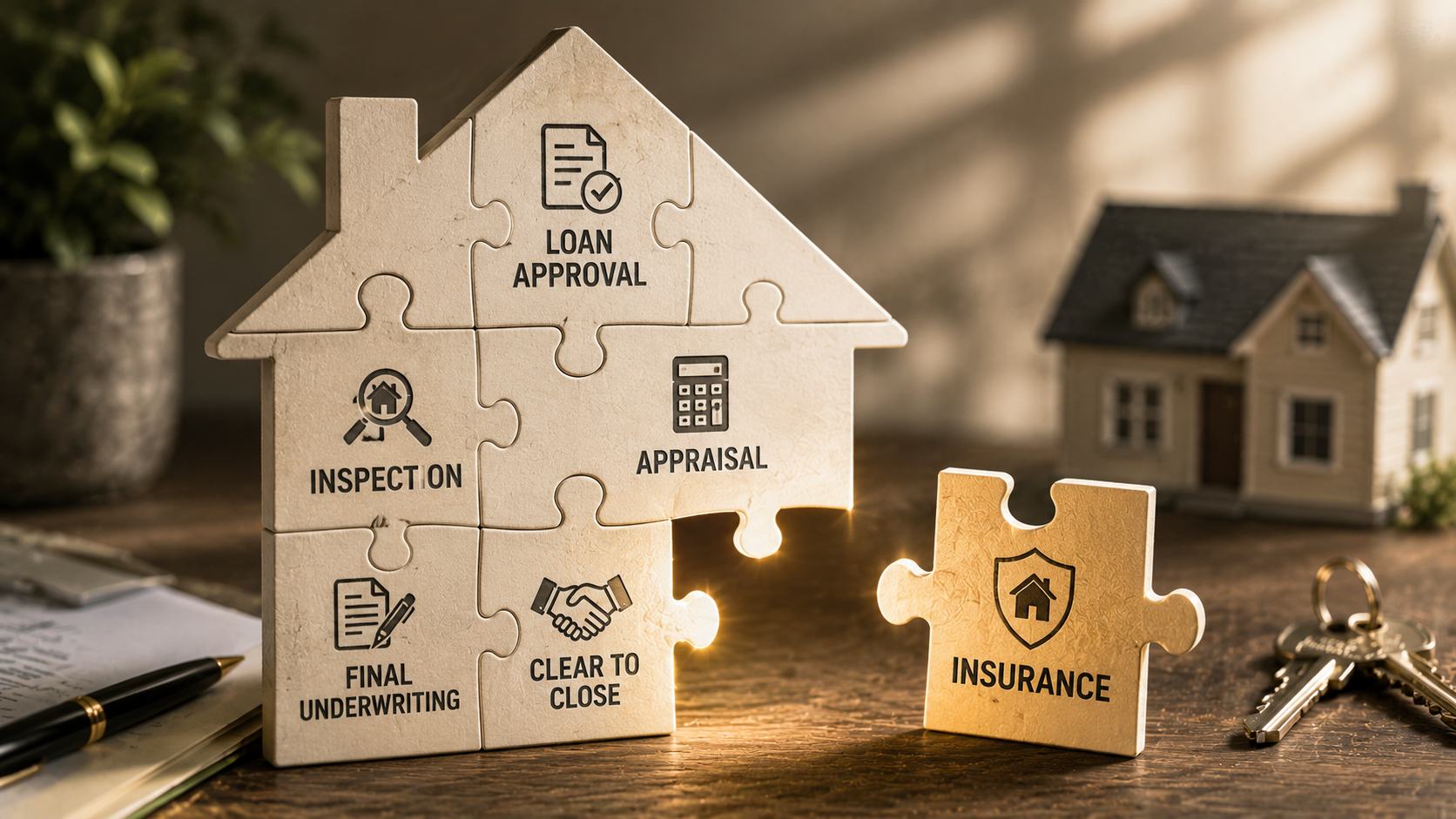
One of the last tasks on a Jonesboro buyer's pre-closing checklist is also one of the most time-sensitive: homeowners insurance. Your lender will not fund your loan without it. There is no clear to close.
The good news is that getting coverage is straightforward once you know the timeline and what to ask for. The problem is that most buyers wait too long to start. If you are buying a home in Jonesboro, this guide walks you through every step so insurance does not become a last-minute headache.
Trenton Hoggard and Tim Ray at NEA Realtor Group walk buyers through this process on every transaction. Here is what you need to know.
Why Your Lender Requires Homeowners Insurance
When you take out a mortgage, the home serves as collateral for the loan. Your lender needs assurance that if a fire, tornado, or major storm damages or destroys the property, there is a financial mechanism in place to repair it or pay off the loan.
Homeowners insurance provides that protection. This requirement applies to virtually every loan type: conventional, FHA, VA, and USDA. Cash buyers are not technically required to carry it, but skipping coverage on a home with no mortgage is a significant financial risk most buyers should not take.
What the lender specifically needs from you:
- A declarations page or insurance binder showing your policy is active as of your closing date
- Dwelling coverage at or above the loan amount (most lenders require full replacement cost coverage)
- The lender listed as the mortgagee or loss payee on the policy
Without that documentation on file, your loan officer cannot issue your Closing Disclosure or clear the loan to fund.
When to Start Shopping
Start shopping for homeowners insurance at least two to three weeks before your scheduled closing date. That window gives you enough time to:
- Get quotes from multiple carriers and actually compare them
- Ask about discounts (bundling with auto, security system, new construction)
- Review the declarations page for errors (wrong address, wrong coverage amount) before sending it to your lender
- Handle any coverage complications, such as a roof age issue or a prior claims history that affects eligibility
Do not wait until the week of closing. Some lenders want your binder as many as 15 days before the closing date. Most require it at least three business days out, when they issue your Closing Disclosure. Ask your loan officer specifically when they need it, and do not assume it is a same-day request.
If you are not sure where to start, ask your agent for the names of insurers that commonly write policies in Craighead County. Trenton and Tim regularly see which carriers are smoothest to work with on Jonesboro transactions.
What Coverage Jonesboro Buyers Actually Need
Homeowners insurance has several components. Here is what each one covers and what you need to pay attention to as a buyer in Northeast Arkansas.
Dwelling Coverage
This is the most important number in your policy. Dwelling coverage protects the structure of your home if it is damaged or destroyed. It should be set to the home's replacement cost: what it would actually cost to rebuild at today's construction labor and material prices, not the purchase price or market value.
A common and costly mistake: insuring for the purchase price instead of replacement cost. If you paid $240,000 for a Jonesboro home that would cost $290,000 to rebuild from scratch, you want $290,000 in dwelling coverage. Your insurer can run a replacement cost estimate when you get your quote. Take it seriously.
Personal Property Coverage
This covers your belongings inside the home: furniture, electronics, clothing, appliances you own, and similar items. Standard policies typically set personal property coverage at 50-70% of your dwelling coverage amount. You can often increase it if you have higher-value items.
Liability Coverage
Liability coverage protects you if someone is injured on your property or if you accidentally cause damage to someone else's property. Most buyers carry $100,000 to $300,000 in liability coverage. If you want more protection than that, a personal umbrella policy is a cost-effective add-on.
Additional Living Expenses (ALE)
If your home becomes uninhabitable due to a covered loss (storm, fire, etc.), ALE coverage pays for temporary housing, meals, and related costs while repairs are made. In Arkansas, where severe weather is a real factor, this coverage matters. Make sure it is included in your policy.
What Arkansas Buyers Need to Know
Homeowners insurance in Arkansas works a bit differently than what national averages and generic guides describe. Here are the local realities.
Premiums Are Meaningfully Higher Than the National Average
Arkansas homeowners insurance costs are well above the national average. According to Insurance.com, the average homeowners insurance cost in Arkansas runs approximately $3,733 per year for a policy with $300,000 in dwelling coverage. The national average for comparable coverage is significantly lower.
The reason is straightforward: Arkansas sits in an active severe weather corridor. Tornadoes, hailstorms, and high winds are the primary drivers of claims in Northeast Arkansas, and insurers price that risk into premiums. For context, Bankrate puts the national average at $2,424 per year for $300,000 in dwelling coverage. Budget for a meaningfully higher figure in Arkansas. When you are calculating your monthly mortgage payment as part of your home search, include an insurance estimate so the number does not come as a shock when you close.
Wind and Hail Deductibles Are Often Separate
Many Arkansas policies include a separate wind and hail deductible that is calculated as a percentage of your dwelling coverage amount, not a flat dollar figure. A 1% wind/hail deductible on a $300,000 home means you would pay the first $3,000 of a wind or hail claim out of pocket before your insurer steps in.
This is one of the most commonly misunderstood parts of an Arkansas policy. When you receive a quote, ask specifically: what is my wind/hail deductible, and is it a percentage or a flat amount? That single question can save you from a surprise after a spring storm.
Flood Insurance Is a Separate Policy
Standard homeowners insurance does not cover flood damage. If your property is in a FEMA-designated flood zone, your lender may require a separate flood insurance policy through the National Flood Insurance Program (NFIP). Flood zone status is disclosed in your title commitment and should come up during your title search.
Even if your home is not in a mapped flood zone, flood coverage through the NFIP or a private carrier is available and worth considering for properties near drainage areas or in lower-lying parts of Craighead County.
Older Roofs Can Create Coverage Problems
Insurers across Arkansas are increasingly scrutinizing roofs older than 15-20 years. Some carriers will only offer actual cash value coverage (not replacement cost) on an aging roof, or they may exclude hail damage from a roof that shows prior deterioration.
During your inspection period, note the roof's age and condition. If the home has a 20-year-old roof and you are in a hail-prone area, start your insurance shopping early and be upfront with carriers about the roof age. This is better to surface during due diligence than when you are three days from closing.
The Insurance Binder: What It Is and When to Send It
Once you choose a policy and commit to it (called "binding" the policy), your insurer issues an insurance binder. This is a temporary proof-of-coverage document that confirms your policy is active and in force while the full policy paperwork is processed.
The binder includes:
- The insured's name and the property address
- The policy effective date (must be on or before your closing date)
- Coverage amounts for dwelling, liability, and personal property
- The lender's name and address listed as mortgagee or loss payee
Send the binder to your loan officer as soon as you receive it. Your lender needs it on file to issue your Closing Disclosure and complete final loan approval. Getting a binder typically takes one business day or less once you have selected a policy and paid any required deposit to bind coverage.
How Homeowners Insurance Gets Paid at Closing
Here is where buyers frequently get confused: you will pay for homeowners insurance as part of your closing costs, even if you have already paid a deposit to bind the policy.
Most lenders require that 12 months of homeowners insurance premium be prepaid at closing and placed into your escrow account. This prepaid shows up on your Closing Disclosure under Section F (Prepaids). The lender then holds these funds and pays the insurer directly when the policy renews.
After closing, your monthly mortgage payment (your PITI: principal, interest, taxes, and insurance) includes a monthly escrow contribution toward your insurance renewal. The lender manages the escrow account and pays the premium on your behalf each year.
In practical terms: at closing, you will typically pay one full year of premium up front plus an escrow cushion of two to three months. Add your annual insurance estimate into your closing cost calculations early. It is one of the prepaids that surprises buyers who only focused on the down payment. Your loan officer will include the actual figure on your Loan Estimate.
A Quick Timeline for Jonesboro Buyers
- Under contract: Ask your agent for the typical closing timeline. In Jonesboro and Northeast Arkansas, most transactions close in 30-45 days from accepted offer.
- Week 2 after going under contract: Start requesting homeowners insurance quotes. Get at least two to three. Consider bundling with your auto policy.
- Two to three weeks before closing: Select a carrier, pay the binding deposit, and receive your binder. Send it to your loan officer immediately.
- Three business days before closing: Your lender issues the Closing Disclosure. Your insurance prepaid will appear as a line item. Confirm the amounts match your quote.
- Closing day: Your escrow account is funded. The lender holds your insurance prepaid and pays the policy on your behalf. Your coverage is active from day one.
Frequently Asked Questions
Q: How long does it take to get a homeowners insurance binder in Arkansas?
Most insurers issue a binder within one business day once you select a policy and pay the initial premium deposit. The process of shopping, comparing quotes, and making a decision typically takes three to seven days if you are being thorough. Do not start this process the week of closing.
Q: Can I bundle my car and home insurance with the same company?
Yes, and it is worth pricing out. Multi-policy discounts from bundling auto and home insurance with the same carrier can reduce your annual premium meaningfully. Get standalone quotes first, then ask for a bundled quote and compare. Many Jonesboro buyers save $200-$400 per year by bundling.
Q: What if the home I am buying has an older roof? Will I still be able to get insurance?
Possibly, but your options may be limited and your premium will likely be higher. Some carriers in Arkansas will not write replacement cost coverage on roofs over 15-20 years old. Others will write the policy but with an actual cash value rider on the roof, which means you absorb depreciation on a roof claim. Surface the roof age with insurers upfront and factor any coverage limitations into your due diligence decision.
Questions About Your Jonesboro Home Purchase?
Trenton Hoggard and Tim Ray at NEA Realtor Group guide buyers through every step of the closing process, including insurance timing, escrow setup, and what to expect on closing day. We have earned 5-star reviews and are the #1 real estate team in the Northeast Arkansas MLS by production. If you have questions about what to expect during your purchase, we are here.
Connect with NEA Realtor Group