How to Buy a Fixer-Upper in Jonesboro
Can you finance repairs into the loan when you buy a fixer-upper in Jonesboro?
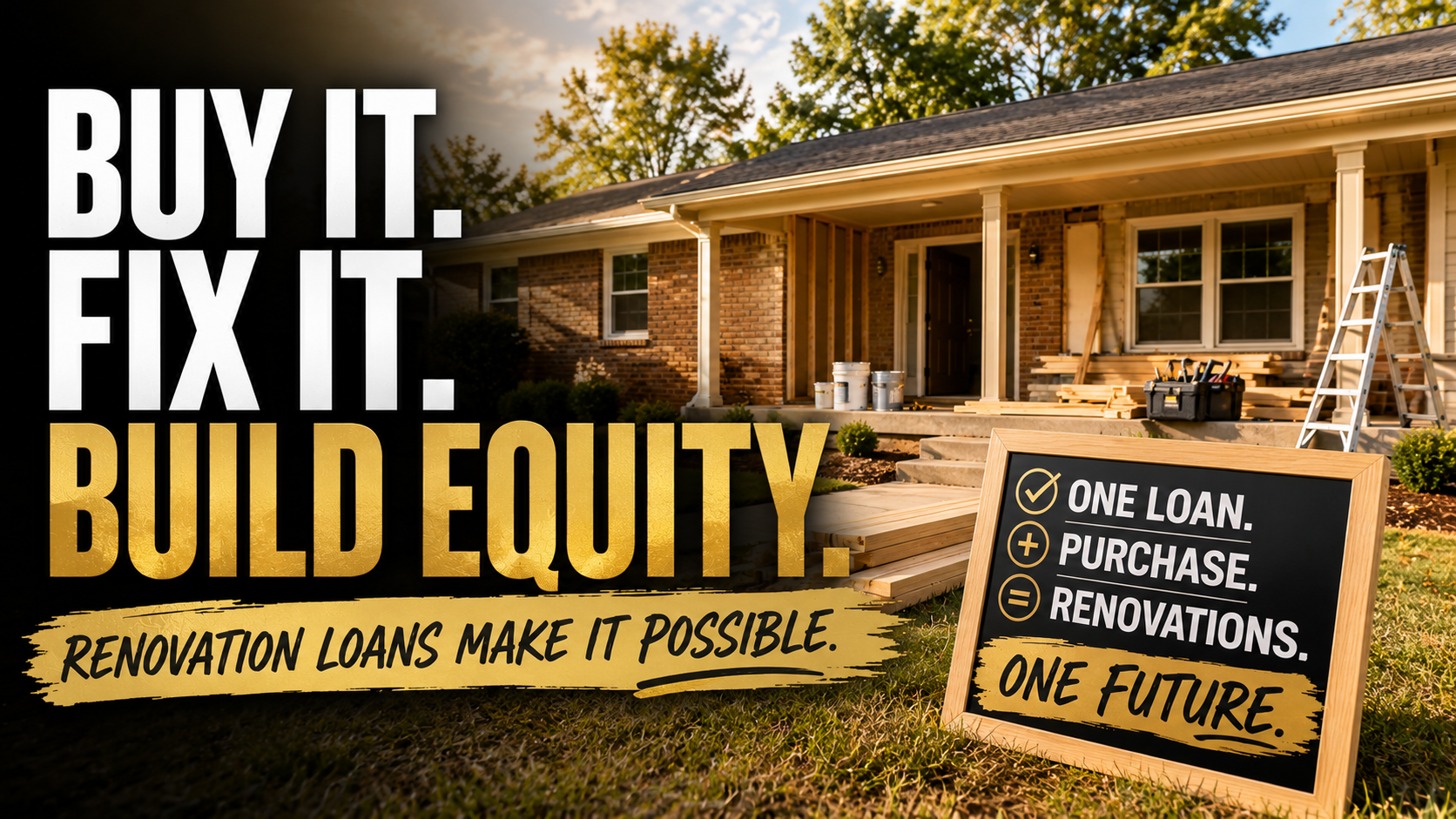
Yes. Renovation loans such as the FHA 203(k), Fannie Mae HomeStyle, and the USDA renovation loan let Jonesboro buyers roll the purchase price and the repair budget into a single mortgage, so you can buy a home that needs work without paying for the updates in cash.
Plenty of homes in Jonesboro and across Northeast Arkansas have solid bones and a dated kitchen, an aging roof, or a floor plan that needs reworking. Those homes often sit a little longer and sell for less, which can be a real opening for a buyer who is willing to put in some work.
At NEA Realtor Group, Trenton Hoggard and Tim Ray walk buyers through this exact decision all the time, and the question is almost always the same: how do I actually pay for the repairs? The good news is that you usually do not have to cover them out of pocket. If you are early in the process and weighing your options, our guide to buying a home is a good place to start.
The tool that makes a fixer-upper work for most buyers is a renovation loan. Here is how it works, which programs you can use in our market, and how to tell when a project is worth taking on.
What a Renovation Loan Actually Does
A standard mortgage only lends against the home as it sits today. If the house needs a new roof, an HVAC system, or a full kitchen, a normal loan will not hand you extra money to fix those things after closing.
A renovation loan is different. It lets you borrow against what the home will be worth once the planned work is finished, and it bundles the purchase price and the repair budget into one loan with one monthly payment.
Here is the basic flow:
- You and a licensed contractor put together a scope of work and a bid before closing.
- An appraiser values the home based on what it will be worth after the work is done, often called the "as-completed" value.
- You close on the purchase and the repair money goes into an escrow account, not into your pocket.
- The contractor gets paid in stages, called draws, as the work is inspected and verified.
The result is one loan that covers both the house and the renovation, instead of a purchase loan plus a separate high-interest credit card or personal loan for the updates.
The Renovation Loans Jonesboro Buyers Use
There is no single renovation loan. The right one depends on your credit, your down payment, the home's location, and how much work it needs. These are the four most common options for buyers in Northeast Arkansas. Your loan choice also connects to the bigger financing picture, which we break down in our comparison of Jonesboro mortgage options.
FHA 203(k)
The FHA 203(k) is the renovation loan most people have heard of, and it comes in two versions.
- Limited 203(k): for cosmetic and non-structural work. As of HUD's late-2024 update, it can finance up to $75,000 in repairs (raised from the old $35,000 cap), and it does not require a HUD consultant. Think paint, flooring, a kitchen or bath refresh, a roof, or a new HVAC system.
- Standard 203(k): for bigger or structural projects. It allows things like moving walls or major repairs, requires at least $5,000 in work, and uses a HUD consultant to oversee the scope. The loan amount can go up to the FHA limit for the county, which comfortably covers Jonesboro's typical price range.
Both keep the familiar FHA basics: a down payment as low as 3.5 percent and more flexible credit guidelines, which is why first-time buyers often land here.
Fannie Mae HomeStyle Renovation
The Fannie Mae HomeStyle loan is the conventional answer to the 203(k). It typically wants a credit score around 620 and a down payment as low as 3 to 5 percent for buyers who qualify.
It is flexible on what you can do: you can finance most projects up to 75 percent of the home's as-completed value, and the work does not have to add value the way some programs require. If the home is not livable during the work, HomeStyle can even finance several months of payments while the renovation is underway. Freddie Mac offers a close cousin called CHOICERenovation if your lender leans that direction.
USDA Renovation Loan
A large share of Northeast Arkansas sits in USDA-eligible rural territory, including many areas just outside Jonesboro's city limits. For buyers in those zones, the USDA renovation loan is one of the strongest tools available.
It can finance 100 percent of the purchase plus repairs with no down payment, up to the as-improved value. There are household income limits (generally around 115 percent of the area median) and a credit score floor most lenders set near 620. A limited version covers up to $35,000 in non-structural work, and a standard version handles larger or structural projects.
VA Renovation Loan
Eligible veterans and service members can use a VA renovation loan to buy and repair a home with no down payment. The catch is that the work has to improve the home's livability, use, and safety, so it leans toward repairs rather than luxury upgrades.
Pools, room additions, and structural changes are generally off the table, repair budgets are usually capped around $50,000, and the work normally has to be finished within about 120 days of closing.
How the Process Differs From a Normal Purchase
Buying a fixer-upper with a renovation loan follows the same basic path as any Jonesboro purchase, but a few steps are added, and the timeline runs longer.
Expect these differences:
- Contractor bids come first. You need a licensed contractor and a written scope before the loan can be finalized, so it pays to line one up early.
- The appraisal looks forward. Instead of valuing the home as-is, the appraiser values it as-completed, based on your plans plus comparable sales. In a lower-volume market like ours, comps may reach back 90 to 180 days to find true matches, so a realistic budget matters.
- Repair money is held in escrow. Funds are released to the contractor in draws as work is verified, which protects you and the lender.
- Closing takes longer. Plan for a few extra weeks compared with a standard purchase, since the scope and bids have to be reviewed and approved.
None of this is hard, but it does mean your agent, lender, and contractor need to work as a team from the start. That coordination is a big part of what we do for buyers in Jonesboro and the surrounding NEA towns.
When a Fixer-Upper Makes Sense in Jonesboro
A home that needs work can be a smart buy, especially with 2026 inventory looser than it was a couple of years ago and the 30-year fixed averaging 6.49 percent in late June, according to Freddie Mac. A little more room to negotiate means a fixer-upper can sometimes be bought below the price of a comparable move-in-ready home.
A project tends to work well when:
- The home is structurally sound and the work is mostly cosmetic or system updates.
- The after-repair value supports the purchase price plus the renovation budget.
- You have a little patience for a longer closing and a few weeks of work.
It is worth thinking twice when the inspection turns up serious foundation movement, major drainage problems, or widespread issues that balloon the budget. A solid home inspection is how you find out which camp a house falls into, and in Northeast Arkansas a standard inspection usually runs $500 to $1,000, with more for larger homes or add-on services. Our walkthrough of what happens during a home inspection covers what to look for.
If a renovation loan starts to feel like more than you want to take on, buying something move-in ready or even new construction may be the better path. The point of the conversation is to match the home, the budget, and your appetite for a project, not to talk anyone into a renovation.
Frequently Asked Questions
Q: How much can you finance for repairs on a Jonesboro fixer-upper?
It depends on the program. The FHA Limited 203(k) covers up to $75,000 in non-structural repairs, the Standard 203(k) goes higher for larger or structural work up to the county FHA limit, and HomeStyle can finance renovations up to 75 percent of the as-completed value. A lender can tell you the exact figures for the home and loan you are considering.
Q: Do you need a bigger down payment for a renovation loan?
Usually no. Renovation loans keep the same low down payment as the base program: about 3.5 percent for FHA 203(k), 3 to 5 percent for HomeStyle, and zero down for USDA and VA renovation loans if you qualify. The repair budget is rolled into the loan, not added to your cash to close.
Q: Can you do the renovation work yourself?
In almost all cases, no. Renovation loans require licensed, insured contractors and written bids before closing, and the funds are paid out as the work is inspected. Do-it-yourself work is rarely approved, and only under tight conditions, so plan on hiring out the project.
A quick note: we are real estate agents, not lenders, attorneys, or contractors. Program rules and loan limits change, so confirm the current details with a qualified lender and a licensed contractor before you write an offer.
Thinking About a Fixer-Upper in Jonesboro?
Trenton Hoggard, Tim Ray, and the team at NEA Realtor Group can help you find homes with good bones, line up the right renovation loan, and run the numbers before you make an offer in Jonesboro and across Northeast Arkansas. We are proud to have earned dozens of 5-star reviews and to rank as the #1 real estate team in the Northeast Arkansas MLS by production.
Connect with NEA Realtor Group
:format(webp):quality(80)/u.realgeeks.media/neahomesearch/team_sidebar.jpg)
:format(webp):quality(80)/u.realgeeks.media/contentcodes2/arrow.png)
:format(webp):quality(80)/u.realgeeks.media/neahomesearch/Market-Report-3.png)