Repairs Your Buyer's Lender Will Require in Jonesboro
Can your buyer's lender make you fix things before closing?
Yes. If your Jonesboro buyer is using an FHA, VA, or USDA loan, the appraiser inspects the home against health, safety, and soundness standards, and those flagged items usually have to be repaired before the loan can close.
You accepted an offer, the buyer ordered their appraisal, and now there is a line on the report that says certain items must be corrected before the lender will fund the loan. Peeling paint. A missing handrail. A section of bare wiring in the crawlspace. Suddenly the question is not what your home is worth. It is what you have to fix to get to the closing table.
This catches a lot of Jonesboro sellers off guard, because these repairs are not coming from the buyer's home inspection. They are coming from the buyer's lender, through the appraiser, and they work differently. Knowing which loans trigger them, what tends to get flagged, and how the timeline works lets you respond quickly instead of scrambling. If you want the full picture of the selling process first, our Home Selling Toolkit walks through every stage. Here is what you need to know specifically about lender-required repairs.
Lender-Required Repairs vs. Inspection Repairs: Two Different Things
Sellers often blur these together, but they come from two separate places in the transaction.
- Inspection repairs come from the buyer's own home inspection. They are optional and negotiable. The buyer can ask, you can say yes, no, or counter with a credit, and the two of you work it out. Nobody outside the contract forces the issue.
- Lender-required repairs come from the appraiser, who is working for the buyer's lender. These are not a negotiation between you and the buyer. The lender will not fund the loan until the listed items are corrected and, in many cases, re-verified. If they do not get fixed, the financing does not happen.
For a closer look at the optional, buyer-driven side of the process, see our post on what happens during the home inspection in Jonesboro. This article is about the other side: the repairs the loan itself demands.
It also helps to separate repairs from value. The appraiser is doing two jobs at once: confirming the home is worth the contract price, and confirming it meets the loan's condition standards. Those are independent. For the value side and what to do if the number comes in low, our guide on what Jonesboro sellers need to know about appraisals covers it. Here we are focused on condition.
Which Loans Actually Require Repairs
Not every buyer brings repair requirements with them. Whether the appraiser can require fixes depends on the loan type, and that matters a lot in Northeast Arkansas, where government-backed loans are common.
- Conventional loans: The appraiser still notes obvious problems, but conventional financing is generally more flexible. Unless something materially affects safety or value, repairs are less likely to be mandated.
- FHA loans: The appraiser follows U.S. Department of Housing and Urban Development standards and flags anything that threatens health, safety, security, or the home's continued marketability.
- VA loans: The appraiser checks the home against the Department of Veterans Affairs Minimum Property Requirements, which protect veteran buyers from purchasing a home with serious defects.
- USDA loans: Common in the rural-eligible areas around Jonesboro, Brookland, and Bono, USDA financing applies its own property condition standards, which closely track the FHA approach.
Because so many buyers in the Jonesboro area use FHA, VA, or USDA financing, the odds that your buyer's loan carries repair requirements are higher here than in many metro markets. If you know your buyer's loan type early, you can anticipate what the appraiser is likely to look for.
What the Appraiser Commonly Flags
The standard for FHA, VA, and USDA appraisals is consistent: items that affect health, safety, structural soundness, or the basic livability of the home. HUD's appraisal guidance frames required repairs as those needed to protect the occupants and preserve the property's marketability. In practical terms, here is what tends to come up on Jonesboro homes:
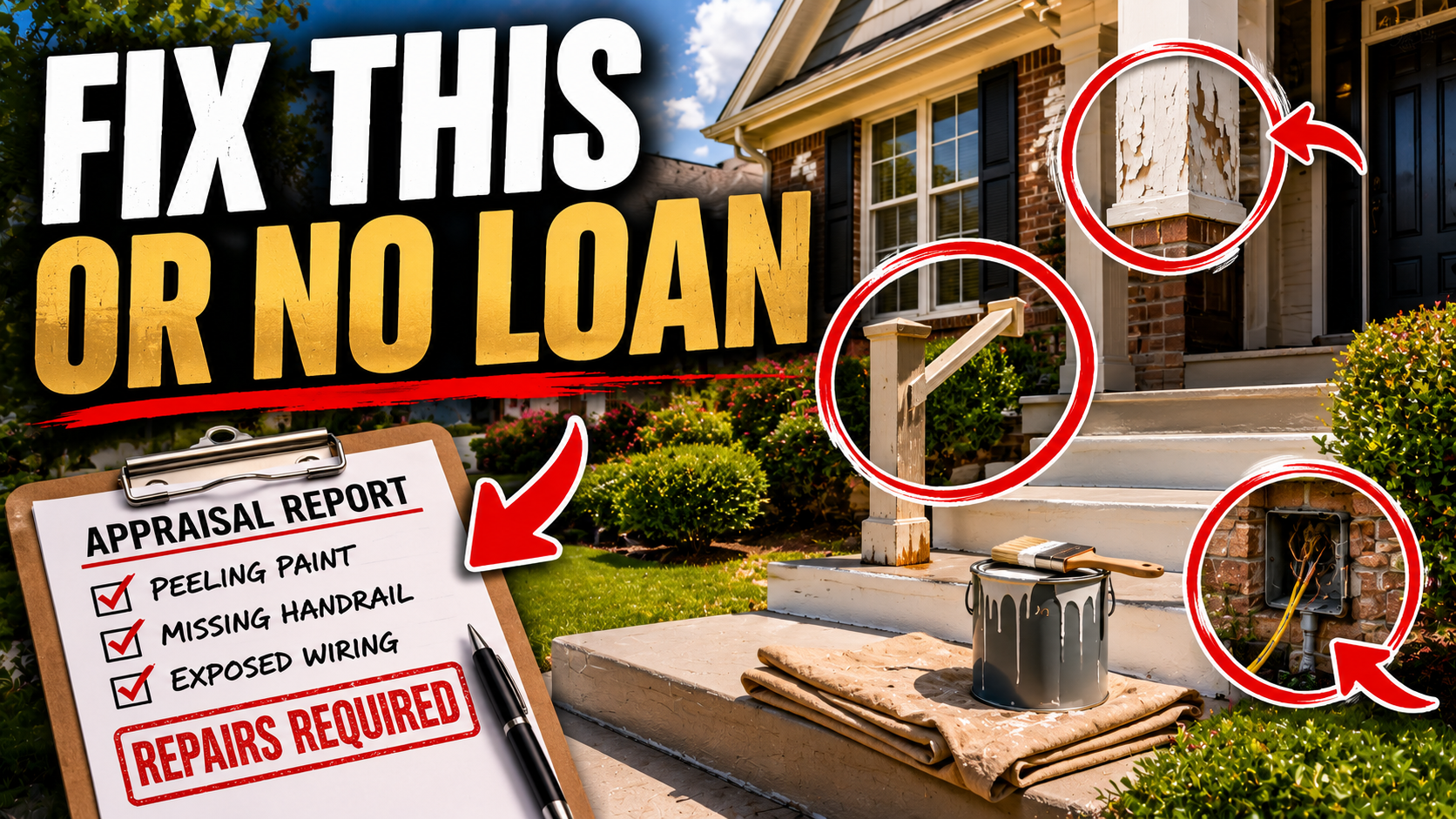
- Peeling or chipping paint, especially on homes built before 1978, where it is treated as a potential lead hazard. This is one of the single most common flags.
- Missing or loose handrails on stairs and steps, including porch steps and any run with several steps or a meaningful drop-off.
- Exposed or improper wiring, missing outlet and junction-box covers, and visible electrical hazards.
- Roof problems, such as active leaks, missing shingles, or a roof near the end of its serviceable life with little remaining lifespan.
- Plumbing leaks and water damage, including active leaks, stained or soft areas, and anything pointing to ongoing moisture intrusion.
- Broken windows, missing or damaged exterior doors, and anything that leaves the home insecure or exposed to the weather.
- Non-functioning utilities or systems. The appraiser expects working electricity, water, heat, and a functioning water heater. If utilities are off, that alone can stall the appraisal.
- Foundation and structural concerns, which matter in our area given clay soils that can shift and settle, and crawlspaces that hold moisture.
Cosmetic wear, dated finishes, and small imperfections generally do not trigger required repairs. The line the appraiser is drawing is about safety and soundness, not style.
VA and USDA Items That Catch NEA Sellers
A few requirements show up more often on VA and USDA deals in Northeast Arkansas, particularly on rural properties and homes on well and septic.
- Wood-destroying insect inspection. VA and USDA transactions in our region typically call for a termite report. Active infestation or untreated damage usually has to be addressed.
- Well and septic standards. USDA financing in particular can require that a private well meets water-quality standards and that the septic system is functioning, which is common on acreage and outlying homes around Jonesboro.
- Safe, year-round access and basic systems. VA's Minimum Property Requirements look for things like a continuing supply of safe water, adequate heating, a sound roof, and dry, usable space. USDA applies a similar habitability bar described in its single-family housing program.
If you are on a well, a septic system, or acreage and you know your buyer is using a USDA or VA loan, it is worth flagging these to your agent up front so nothing surprises you late in the process.
What Happens After the Appraiser Flags Repairs
When required repairs come back on the appraisal, the deal does not end. It just has to clear a few steps before closing:
- The repairs get completed. In most Jonesboro transactions, the seller handles required repairs because the loan cannot close without them, though who pays is still a point that can be negotiated in the contract.
- The work is documented. Receipts, contractor invoices, or photos are gathered as proof the items were corrected.
- The appraiser re-verifies. The appraiser often returns for a final inspection to confirm the repairs were made, which can add a few days to the timeline.
- The lender clears the condition. Once the appraiser signs off, the lender removes the repair condition and the file moves back toward closing.
Because that re-inspection step takes time, required repairs can push your closing date. The faster the work gets done and documented, the less it affects the schedule. Build a little buffer into your expectations if your buyer is using government financing.
Who Pays for the Repairs?
There is no law that forces the seller to pay. In practice, sellers usually do, because the loan will not fund otherwise and the buyer typically cannot legally pay to repair a home they do not yet own. That said, this is negotiable. You can ask the buyer to share the cost, you can negotiate other terms in exchange, and in limited cases a repair escrow holdback can be arranged so a minor item is completed shortly after closing. Your agent can help you weigh those options against the risk of losing the deal.
How to Get Ahead of It Before You List
The best time to deal with lender-required repairs is before they ever show up on an appraisal. A walk through your own home with these standards in mind catches most of the common flags:
- Scrape and touch up any peeling exterior or interior paint, especially on older homes.
- Add or secure handrails on every set of steps, including the porch and any deck stairs.
- Replace missing outlet and switch-plate covers and address any exposed wiring.
- Fix dripping faucets, running toilets, and any visible plumbing leak, and clear up the water stains they leave behind.
- Make sure all utilities are on and working when the appraiser visits.
- Repair or replace broken windows and make sure exterior doors close and lock.
If you want a fuller read on the home's condition before listing, a pre-listing inspection is an option, and in Northeast Arkansas a standard single-family inspection generally runs $500 to $1,000, with larger homes, crawlspaces, and add-on services like a sewer scope or septic check pushing higher. Spending a few hundred dollars to find and fix obvious safety items now can keep a government-loan appraisal from stalling your deal later.
When we list a home, we also run a dedicated direct mail campaign for every property, which helps generate strong, well-qualified interest. Pairing that kind of exposure with a home that is already prepared for an FHA, VA, or USDA appraisal is how you keep a deal moving smoothly from offer to closing.
If the Repairs (or the Value) Threaten the Deal
Most required-repair lists are short and manageable. Occasionally the items are significant, the buyer balks at the cost, or the appraisal also raises a value problem, and the contract starts to wobble. That is a moment to understand your options rather than panic. Our post on what Jonesboro sellers do when buyer financing fails walks through what happens if a government-backed loan cannot close and how to protect yourself on the next contract.
In the large majority of cases, though, lender-required repairs are a checklist to work through, not a dealbreaker. Handle the items, document them, let the appraiser re-verify, and the loan moves forward.
Frequently Asked Questions
Q: Does a conventional-loan buyer mean I avoid required repairs entirely?
Usually it lowers the odds, but not always. Conventional appraisals are generally more flexible about condition, so cosmetic and minor items rarely trigger mandated repairs. However, if the appraiser sees something that affects safety or clearly affects value, even a conventional lender can require it to be addressed before closing. Loan type changes the likelihood, not the possibility.
Q: Can the buyer make the required repairs instead of me?
Almost never before closing, because the buyer does not own the home yet and generally cannot pay to repair a property that is not theirs. The repairs typically fall to the seller because the loan cannot fund until they are done. Cost can still be negotiated, and in limited situations a repair escrow can let a small item be finished just after closing, but the work itself usually has to happen on the seller's side first.
Q: How much do lender-required repairs delay a Jonesboro closing?
It depends on the items and how fast they get done. Simple fixes completed and documented within a few days may cost you little or no time. The main delay is the appraiser's return trip to confirm the work, which can add several days. Tackling the repairs quickly and gathering proof is the best way to keep your original closing date intact.
Selling to a Government-Loan Buyer? Let's Get Ahead of the Appraisal.
With 5-star reviews and recognition as the #1 real estate team in the Northeast Arkansas MLS by production, Trenton Hoggard and Tim Ray at NEA Realtor Group have guided Jonesboro sellers through FHA, VA, and USDA appraisals across every kind of home. We can help you spot likely repair flags before you list and keep your closing on track. Call or text us at 870-273-0633.
Connect with NEA Realtor Group
:format(webp):quality(80)/u.realgeeks.media/neahomesearch/team_sidebar.jpg)
:format(webp):quality(80)/u.realgeeks.media/contentcodes2/arrow.png)
:format(webp):quality(80)/u.realgeeks.media/neahomesearch/Market-Report-3.png)