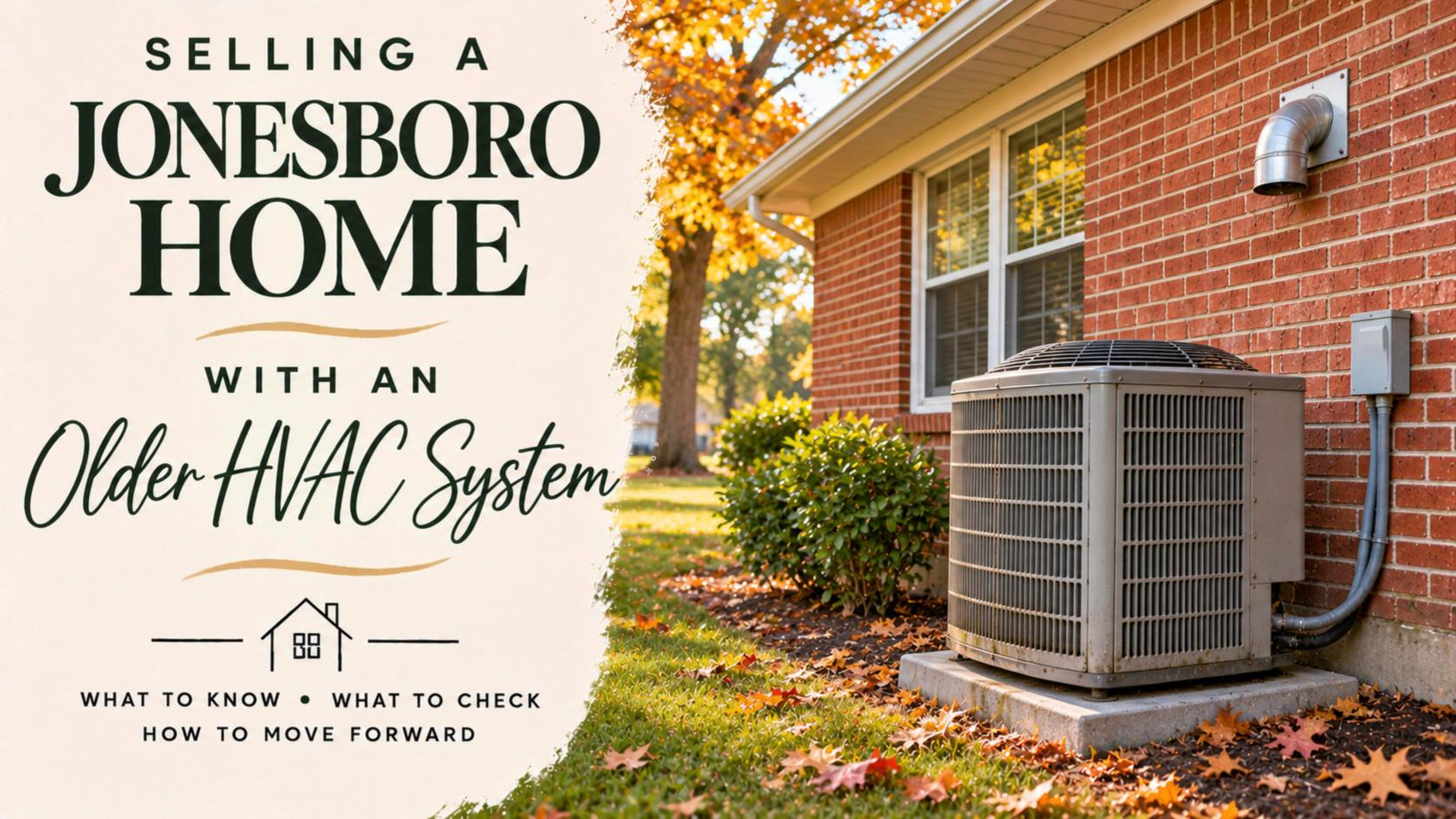
Selling a Jonesboro Home With an Older HVAC System
Will an older HVAC system hurt the sale of your Jonesboro home?
It can raise questions in inspection, but you can plan for it. Know your system's age, service it, then repair, replace, credit, or sell as-is.
Your furnace is loud, your air conditioner has been limping since July, or the unit outside is older than your kids. Now you are about to list your Jonesboro home, and you are wondering if the HVAC system is going to cost you at the negotiating table.
It might. Heating and cooling is one of the big-ticket systems buyers and inspectors look at first, and November is when buyers really notice whether a house keeps up in cold weather. The good news is that an older system is rarely a deal breaker if you plan for it before the first showing.
Here is how Trenton Hoggard and Tim Ray at NEA Realtor Group walk Jonesboro sellers through the decision: repair, replace, offer a credit, or sell as-is. If you are weighing the bigger picture first, our guide on selling as-is or making repairs in Jonesboro covers how to think about every system in the home.
Why Buyers Care So Much About HVAC
An HVAC system is expensive to replace, and buyers know it. When an inspector flags an older or poorly performing unit, buyers often ask for a repair, a credit, or a lower price.
Redfin's seller guide to pre-listing inspections lists HVAC among the major systems, along with the roof, foundation, electrical, and plumbing, where findings can lead buyers to push for credits or walk away. It also notes that a buyer's inspection window can be short, so a seller who learns about a problem late has little time to get estimates.
In Jonesboro, we see the same pattern. The system itself matters, but so does the surprise. A seller who already has the facts is in a much stronger position than one who is hearing about a failed heat exchanger or a weak compressor for the first time.
Step One: Find Out What You Actually Have
Before you decide anything, gather the basics. Most sellers know less about their system than they think.
- Age: look for the installation date or the manufacture date on the data label of the furnace, air handler, and outdoor unit.
- Type: gas furnace, electric furnace, or heat pump, and whether the system is a split unit or a package unit.
- Service records: any receipts for repairs, tune-ups, or filter changes. Records help prove the system has been looked after.
- Known issues: uneven rooms, strange noises, frequent cycling, or higher bills. Write them down so you can disclose them honestly.
- Warranty: check whether the system, or any recent part, is still under a manufacturer or installer warranty that can transfer to the buyer.
Keep this in a folder you can hand to your agent. It will make every later conversation easier.
Your Four Options
Option 1: Service It and Keep Records
If the system works but is simply older, a professional tune-up and a clean service record can calm buyers down. The goal is not to make the unit new. It is to show that it runs, it has been maintained, and there is no known problem.
This is often the best first move for a system that is working well. It costs little compared with a full replacement and gives the buyer's inspector less to flag.
Option 2: Repair a Known Problem Before Listing
If you know about a specific defect, such as a failing part or a refrigerant leak, repairing it before you list can remove a negotiating point. Keep the invoice. Be aware that a repair fixes the problem, not the age of the system.
Option 3: Replace the System
Replacement makes the most sense when the system has failed or is clearly at the end of its life. A new system gives you a strong talking point, and it can help your home compete against similar Jonesboro listings.
It is also the most expensive option, and you may not get every dollar back in the sale price. We suggest getting more than one written estimate and talking with us before you commit, so you can compare the cost against a credit or a price adjustment.
Option 4: Sell As-Is or Offer a Credit
Some sellers would rather not spend money before closing. In that case you can disclose the condition, price the home with the system in mind, and be ready to negotiate. Buyers may ask for a credit at closing, a price reduction, or a repair after inspection.
The Redfin guide listed above notes that sellers can also gather contractor estimates in advance. That way, if a buyer raises the issue, you already know what the work would cost, and you can respond with facts instead of guesses.
What About Pre-Listing Inspections?
A pre-listing inspection is one way to learn how the HVAC system and everything else will look to a buyer's inspector. Redfin notes that sellers can use the results to repair issues, get estimates, offer credits, or adjust the price. It also points out that a pre-listing inspection may add less value if you plan to sell as-is.
In Northeast Arkansas, a standard home inspection often runs between $500 and $1,000, and larger homes or added services can push it higher. That is real money, so we usually recommend it when you suspect a system problem and want to know before buyers do.
How HVAC Can Affect the Buyer's Loan and Appraisal
The appraisal looks at the home's market value, not its condition, and an inspection looks at condition. Redfin's appraisal checklist explains that appraisers still look at heating and cooling systems, and that FHA appraisals add property condition, health, and safety requirements. It also notes that VA purchases have minimum property requirements that include adequate heating.
So if your buyer is using FHA or VA financing, a heating system that does not work could slow the closing. Their lender sets the requirements, so we always suggest confirming details with the buyer's lender early.
You can read the full guidance in Redfin's home appraisal process checklist.
Disclosure: Be Honest About What You Know
Whatever path you choose, disclose what you know. Hiding a known problem can create legal trouble and can wreck a deal late in the process. Share the age if you know it, the service history, and any problems you have had.
Honest disclosure also builds trust. Buyers are more likely to stay at the table when they feel the seller is being straight with them.
Should You Offer a Home Warranty?
A home warranty will not make an old system new, but it can reassure a buyer who is worried about a breakdown after closing. We cover the pros and cons in our post on whether Jonesboro sellers should offer a home warranty. Read the coverage details carefully, since plans differ on what they cover and what they exclude.
Timing: Why November Matters
Cold weather exposes weak heating systems, and buyers who tour in winter will notice if a room stays chilly. Freddie Mac reports the average 30-year fixed mortgage rate at 7.18% as of November 5, 2026, its third straight weekly decline and down from 7.24% the week before. You can follow the weekly numbers on the Freddie Mac Primary Mortgage Market Survey page.
Those are national figures, but a little relief can bring buyers back into the market. That means a well-prepared listing with a documented HVAC system is more likely to get attention.
A Simple Plan for Jonesboro Sellers
- Find the age, type, and service history of your system this week.
- Have a licensed professional look at it, and keep the written report.
- Compare repair, replacement, and credit options before the first showing.
- Decide on a pre-listing inspection if you suspect problems.
- Disclose what you know and give your agent the paperwork.
- Let us build the pricing and negotiation plan around the facts. NEA Realtor Group also sends a dedicated direct mail campaign for every listing.
Our Home Selling Toolkit shows how we approach pricing, marketing, and showings from the first day.
Frequently Asked Questions
Q: Do I have to replace an old HVAC system before selling in Jonesboro?
No. Replacement is a choice, not a requirement. Many sellers service the system, keep records, and sell with the HVAC as-is, then negotiate if the buyer's inspection raises concerns.
Q: Will a buyer ask for a credit for an older furnace or air conditioner?
Sometimes. If the buyer's inspector flags the system, the buyer may ask for a repair, a credit, or a lower price. Knowing the system's condition before you list helps you respond calmly.
Q: Can an HVAC problem stop an FHA or VA closing?
It can. Redfin notes that FHA appraisals add condition, health, and safety requirements, and VA purchases have minimum requirements that include adequate heating. The buyer's lender sets the details, so confirm them early.
Q: Is a pre-listing inspection worth it for HVAC concerns?
It can be, especially if you suspect a problem and want to know before buyers do. Redfin notes it may add less value if you plan to sell as-is.
Q: Should I disclose that my HVAC is old?
Yes. Share what you know, including age and any past problems. Honest disclosure protects you and keeps the deal on track.
Ready to Take the Next Step?
If your furnace or air conditioner is making you nervous about listing, Trenton Hoggard and Tim Ray can help you weigh repair, replacement, and credit options before the first showing. NEA Realtor Group has 5-star reviews and is the #1 real estate team in the Northeast Arkansas MLS by production.
Connect with NEA Realtor Group