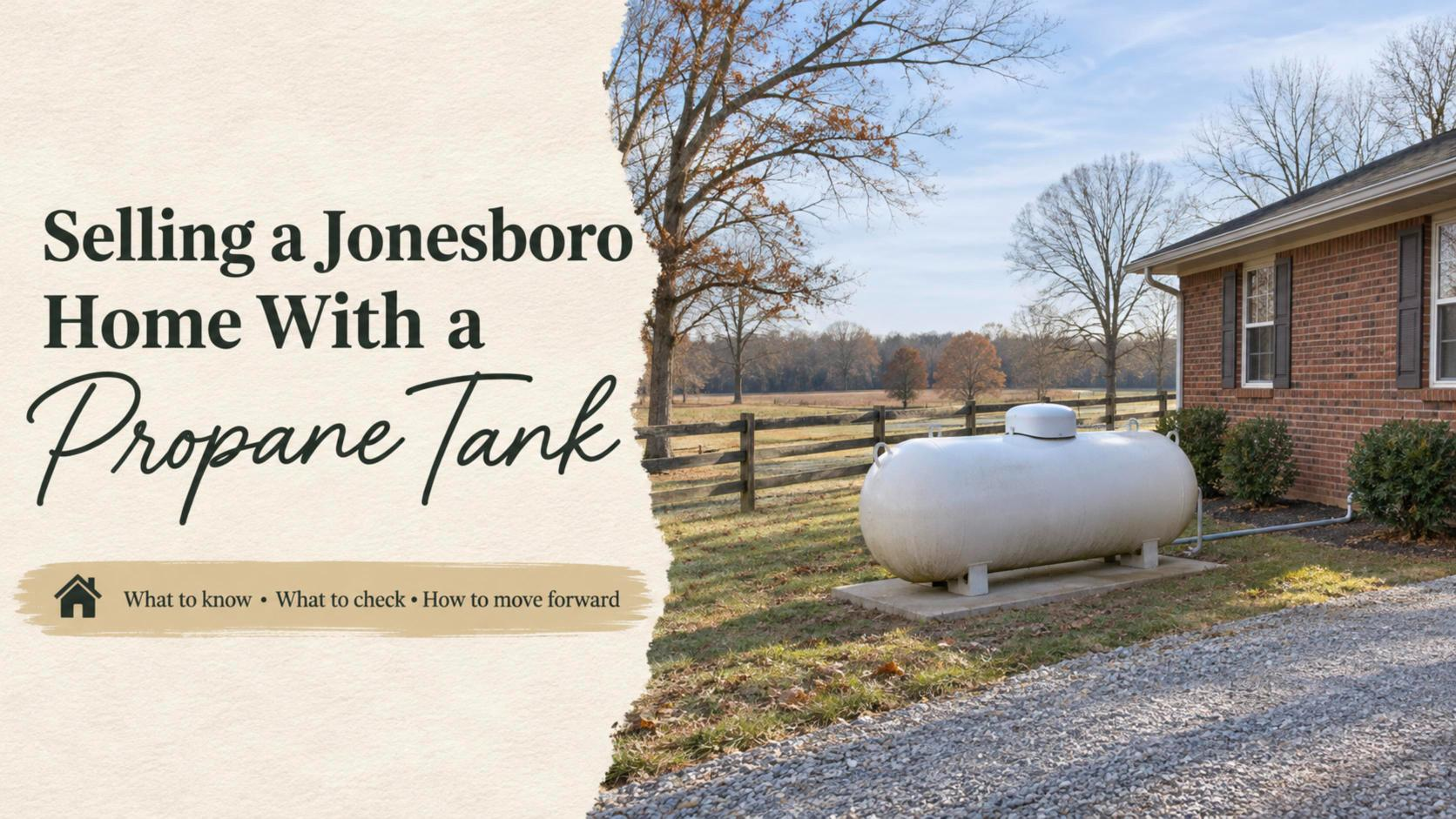
Selling a Jonesboro Home With a Propane Tank
What happens to the propane tank when you sell a Jonesboro home?
If the tank is leased, it stays with the propane company and the buyer sets up their own account. If you own it, it can transfer with the house. Either way, settle the fuel left in the tank before closing.
A lot of homes around Jonesboro run on propane. It is common on country lots outside city limits, on homes with a gas range or gas logs, and on older houses where natural gas never reached the road.
When those homes go on the market, the tank in the side yard raises questions that most sellers have never thought about. At NEA Realtor Group, Trenton Hoggard and Tim Ray walk sellers through this as part of our home selling process, because a propane question that surfaces late can hold up a closing or turn into a dispute over a few hundred gallons of fuel.
Here is what you need to sort out before you list.
Step One: Find Out Who Owns the Tank
This is the single most important question, and a surprising number of sellers guess wrong. Some assume the tank came with the house. Others assume it belongs to the company because a truck shows up to fill it.
There are two common setups:
- Leased (or rented) tank: The propane company owns the tank. You pay an annual rental fee, a minimum-usage requirement, or a fuel price that covers the tank. The tank does not belong to you and cannot be sold with the house.
- Owned tank: You or a prior owner bought the tank outright. It can convey to the buyer, and you can usually buy fuel from any licensed supplier.
Why paperwork matters in Arkansas
Arkansas law is specific here. Under Arkansas Code 15-75-406, if a propane container carries the name or mark of its owner, it is unlawful for anyone other than that owner, or someone the owner authorizes in writing, to fill it or to sell it.
The same statute defines the owner as someone who holds a bill of sale or a paid invoice for the container. So if you believe you own the tank but it still has a company's name on it, you need the paperwork to back that up.
Before you list, gather:
- Your most recent propane bill or account statement.
- Any lease, rental agreement, or service contract with the propane company.
- A bill of sale or paid invoice if you bought the tank, or if a prior owner left you one.
- The tank size and whether it sits above ground or is buried.
If you cannot find anything, call the supplier whose name is on the tank and ask them directly. They can tell you whether the tank is on a lease and what happens to your account when you sell.
If Your Propane Tank Is Leased
A leased tank stays with the propane company, not the property. That is not a problem for most buyers, but it needs to be handled cleanly so nobody is surprised on move-in day.
- Tell buyers up front. Put "propane tank leased" on your seller's disclosure and in the listing details. A buyer who assumes the tank conveys and later learns otherwise has a fair complaint.
- Leave it off the inclusions list. The contract should not list the tank as an item that conveys, because it is not yours to sell.
- Ask about the buyer's options. Most companies will let the buyer open a new account and keep the same tank in place. Some buyers prefer to switch suppliers, which means the old company picks up its tank and the new company sets one.
- Ask about your exit terms. Some lease agreements include a pickup or removal fee, a minimum-usage charge, or a notice requirement. Read yours now so the cost does not show up after closing.
What about the fuel left in a leased tank?
This is where most of the confusion happens. You may have paid for a few hundred gallons that are still sitting in the tank on closing day.
Policies vary by company. Some suppliers will credit or refund unused gallons when you close your account. Others transfer the fuel to the buyer's new account and leave it to the buyer and seller to settle up. Call your supplier, ask exactly how they handle it, and get the answer in writing if you can.
If You Own the Propane Tank
An owned tank is a small selling point, especially for buyers who want to shop around for fuel. It also means a few more details belong in the contract.
- List it as conveying. Name the tank in the contract so there is no question it stays with the house.
- Hand over the paperwork. Give the buyer a copy of the bill of sale or paid invoice so they can prove ownership to any supplier they call.
- Note the tank's age and condition. If it has been inspected, serviced, or repainted, keep that documentation handy for buyers who ask.
- Mention it in the marketing. "Owned propane tank" is a useful line in the listing remarks for a buyer comparing two country properties.
This is a lot like the other items we cover in our guide to what stays and what goes when you sell in Jonesboro. The rule of thumb is simple: if it matters to you or the buyer, write it into the contract.
How to Handle the Fuel Credit at Closing
When the tank is owned, the fuel inside it goes with the house unless the contract says otherwise. That can be real money, especially if you filled up for the winter.
You have a few options, and every one of them is negotiable:
- Buyer reimburses the seller. The tank gauge is read close to closing, and the buyer pays for the remaining gallons at the current per-gallon price as a line item on the settlement statement.
- Fuel conveys at no charge. Some sellers include it to keep the deal simple or to make the offer more attractive.
- Split the difference. Agree on a flat credit in the contract so nobody has to argue over a gauge reading later.
Whatever you choose, put it in writing in the purchase contract. A fuel credit that only exists in a phone call is the kind of thing that gets forgotten until the final walkthrough.
Why this matters more in late fall and winter
Most propane households fill up heading into cold weather, so a seller closing between November and March is more likely to leave a full tank behind. The U.S. Energy Information Administration's 2026 to 2027 Winter Fuels Outlook expects households that heat mainly with propane to spend less this winter than last, but a full residential tank still represents a meaningful amount of money.
Winter also changes the timeline. Based on NEABOR MLS closed sales over the past 12 months, the typical Jonesboro home sold in about 34 days, while the winter months ran slower than spring and early summer. A longer listing period means more time for the tank level to change, so plan to read the gauge again right before closing.
Keep the Tank From Running Empty While the Home Is Listed
This is a common mistake with vacant homes. If you have already moved out and the propane runs out in January, you can end up with frozen pipes, a cold house for showings, and a system that has to be checked before it can be refilled.
Many suppliers will perform a leak or pressure check before relighting a system that ran empty. That can mean a service call and a delay at exactly the wrong time.
- Check the gauge before you list and again every couple of weeks while the home is on the market.
- Set up automatic delivery with your supplier if the home is vacant through the winter.
- Keep the heat set high enough to protect the plumbing, and make sure gas appliances will light for the buyer's inspection.
The inspector will want to see the furnace, water heater, and range running. A home with an empty tank on inspection day may leave the buyer asking for a re-inspection, which pushes everything back.
Buried Tanks, Multiple Tanks, and Other Wrinkles
Not every propane setup is a single tank by the driveway. A few situations deserve extra attention before you list:
- Underground tanks: Buyers cannot see them, so disclose the location and ownership clearly. Mark the dome so a buyer or inspector can find it.
- More than one tank: A home might have one tank for the house and a smaller one for a shop or pool heater. Each one can have a different owner or supplier.
- Old tanks no longer in use: If a tank is abandoned on the property, find out who owns it and whether it should be removed before closing.
- Septic and well properties: Propane often goes hand in hand with rural systems. If your home also has a septic system, our guide on selling a Jonesboro home with a septic system covers what buyers will ask about next.
The Arkansas Liquefied Petroleum Gas Board licenses propane dealers in the state. If you have a safety concern or a dispute with a supplier, that is the agency to contact.
How We Market a Home With Propane
Propane is not a drawback. It is just a detail buyers want answered early, so we put the answer in the listing instead of waiting for the question.
- We note the fuel type and whether the tank is owned or leased in the MLS details and listing remarks.
- We include the supplier's contact information in the property documents so buyers can set up service without hunting for it.
- We price the home using comparable sales from the last 90 to 180 days, because Jonesboro and Northeast Arkansas often do not have enough recent rural sales in a shorter window.
- Every listing gets a dedicated direct mail campaign in addition to online marketing, which helps reach buyers already living in nearby country neighborhoods.
Mortgage rates also shape how buyers look at monthly costs. According to Freddie Mac, the 30-year fixed rate averaged 7.11% as of November 12, 2026. Buyers watching every dollar appreciate knowing what heating costs and fuel arrangements they are walking into. For a broader look at how the local market is moving, our weekly market updates cover what we are seeing in Jonesboro each week.
Your Propane Checklist Before You List
- Confirm whether the tank is leased or owned, and find the paperwork.
- Call your supplier about account closure, fuel credits, and any pickup or minimum-usage fees.
- Note the tank size, location, and fuel type on your disclosure.
- Decide how you want to handle the remaining fuel, and put it in the contract.
- Keep the tank from running empty while the home is listed, especially if it is vacant.
- Read the gauge close to closing and share the reading with the buyer's agent.
Frequently Asked Questions
Q: Can I sell my leased propane tank with my Jonesboro house?
No. A leased tank belongs to the propane company, and Arkansas law makes it unlawful to sell or fill a marked container without the owner's written permission. The buyer can usually open an account with the same company and keep the tank in place.
Q: Who pays for the propane left in the tank at closing?
It depends on what you negotiate. With an owned tank, many sellers ask the buyer to reimburse them for remaining gallons on the settlement statement. With a leased tank, ask your supplier whether they credit unused fuel when you close your account.
Q: Does a propane tank hurt my home's value?
Usually not. Propane is common on Northeast Arkansas homes outside city gas service, and buyers mainly want clear answers about ownership, fuel cost, and supplier options. An owned tank can be a small plus.
Selling a Home With Propane in Jonesboro?
For perspective, NEA Realtor Group has 5-star reviews and is the #1 real estate team in the Northeast Arkansas MLS by production. Trenton Hoggard and Tim Ray can help you sort out the tank, the fuel, and the contract before your home hits the market. Call or text us at 870-273-0633.
Connect with NEA Realtor Group