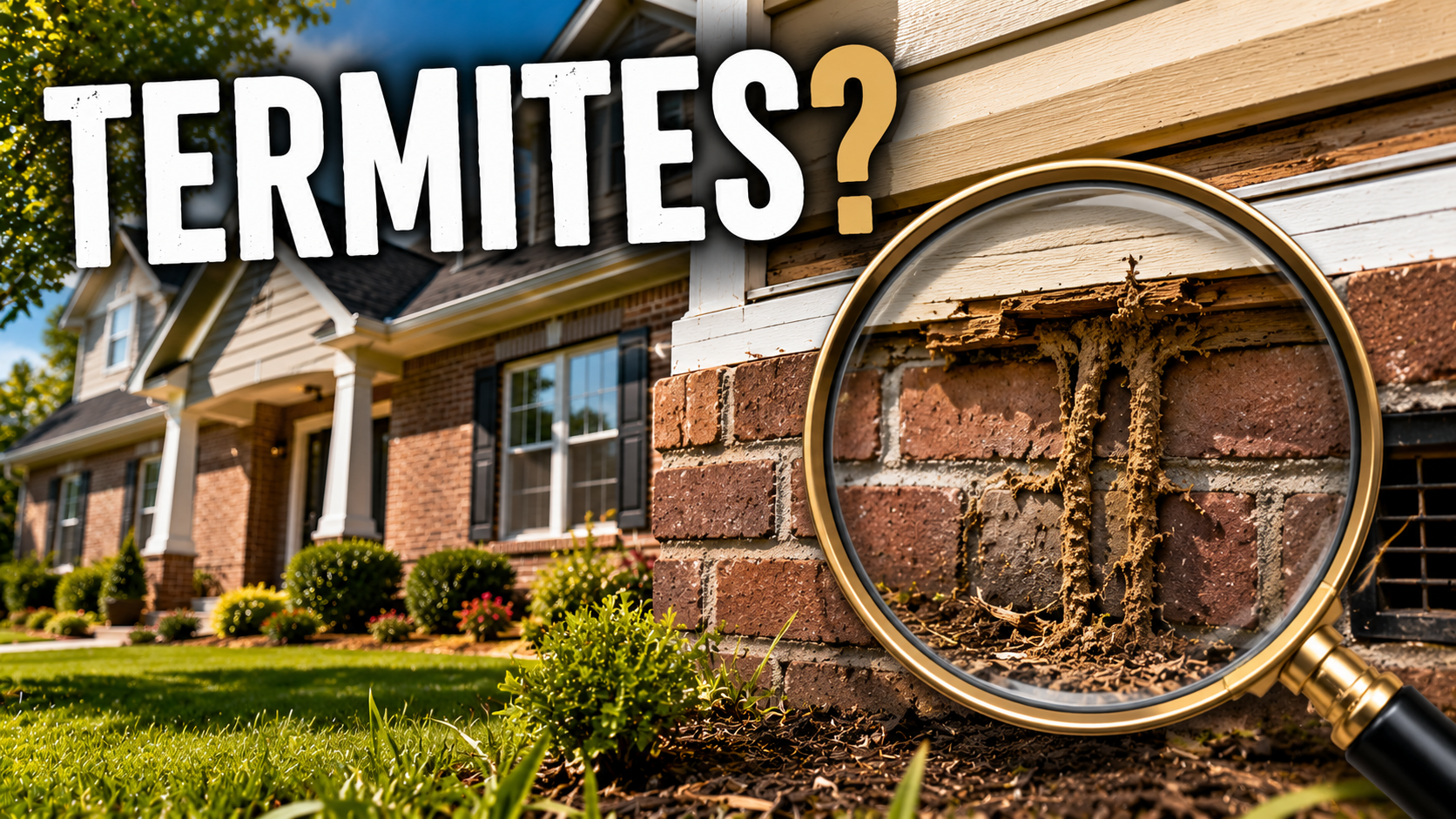
What a Termite Letter Means for Jonesboro Buyers
Do Jonesboro buyers really need a termite letter to close?
In Arkansas, a termite letter (the NPMA-33 wood-destroying insect report) is required for almost every financed purchase in Jonesboro: VA, USDA, FHA, and conventional. The main exceptions are an in-house bank loan or a cash purchase.
You are under contract on a home in Jonesboro, the inspection went fine, and then your lender sends over a checklist with one line that stops you: "wood-destroying insect report required." Suddenly you are wondering what a termite letter is, whether you have to pay for it, and what happens if a pest control operator finds something.
This is one of the most common questions we get from buyers at NEA Realtor Group. Trenton Hoggard and Tim Ray walk clients through it on almost every government-backed loan, because Northeast Arkansas is squarely in termite country and the paperwork shows up at a moment when most buyers are already stretched thin on time.
Here is the plain-language version of what a termite letter is, when you need one, who pays, and how to handle it if the report comes back with activity, so you can keep your closing on track. If you are still early in the process, our guide to buying a home in Northeast Arkansas lays out the full path from offer to keys.
What a Termite Letter Actually Is
A "termite letter" is the everyday name for a wood-destroying insect report. In most of the country, including Arkansas, that report is recorded on a standardized federal form called the NPMA-33.
It is filled out by a licensed pest control operator after they inspect the home, not by your general home inspector. The two inspections are separate, and they look for different things.
A wood-destroying insect inspection focuses on:
- Visible signs of active termites, carpenter ants, carpenter bees, or wood-boring beetles
- Evidence of a prior infestation, such as old mud tubes or treated wood
- Visible damage from wood-destroying organisms
- Conducive conditions that invite pests, like wood-to-soil contact, moisture in the crawlspace, or mulch piled against the siding
The operator marks whether there is active infestation, prior treatment, or visible damage, and notes anything that should be corrected. The form, published through HUD as the NPMA-33, is what your lender and underwriter actually want in the file.
Which Loans Require a Termite Letter
In Arkansas, the practical answer is simple: plan on a termite letter for almost any financed purchase in Jonesboro. The only times you typically will not need one are an in-house bank loan or a cash purchase. Here is how it works by loan type.
VA loans
Arkansas is one of the states where the VA requires a wood-destroying insect report statewide. The Department of Veterans Affairs maps termite risk across the country, and Arkansas falls in the very heavy category, so the report is part of nearly every VA purchase here. The VA will not issue its Notice of Value until that report is in hand, per the VA local requirements for appraisers.
USDA loans
USDA Rural Development loans are common around Jonesboro because so much of the surrounding area qualifies, and in our market they call for a termite letter as a matter of course. The report confirms the home is free of active infestation and serious damage before the loan funds. You can read more about how USDA fits into the picture on the USDA single-family housing program page.
FHA and conventional loans
National guides often describe FHA and conventional termite inspections as optional unless the appraiser flags a problem. That is not how it works here. In Arkansas, FHA and conventional lenders routinely require the NPMA-33 too, because the state sits in a very heavy termite zone. For a financed purchase in Jonesboro, plan on getting one regardless of your loan type.
If you are still deciding between loan programs, our breakdown of USDA, FHA, VA, and conventional loans for NEA buyers walks through how each one treats inspections and property condition.
When you will not need one: in-house loans and cash
There are two common exceptions in Northeast Arkansas. If you finance through an in-house or portfolio loan that a local bank keeps on its own books, that lender sets its own rules and often does not require a termite letter. And if you are paying cash, no lender is involved to require one, though plenty of cash buyers still order an inspection for their own protection given the local termite pressure.
Why Termite Letters Matter So Much in Northeast Arkansas
Termite letters are not just a national formality here. Our climate makes them genuinely useful.
Warm, humid summers and mild winters give subterranean termites a long active season, and late spring through early summer is peak swarm time across Jonesboro and the surrounding towns. If you are house hunting in June, you may literally see swarmers around porch lights and windows.
Several local building patterns add to the risk:
- Crawlspace foundations that trap moisture under the home
- Mature trees and heavy landscaping that put wood and mulch close to the structure
- Clay-heavy soil that holds water against the foundation after a storm
- Older neighborhoods where original wood framing has had decades of exposure
None of this means a given home has termites. It means the inspection is worth taking seriously, even in the rare case your purchase does not strictly require it. A clean termite letter today, plus an active treatment plan, can save you a major repair bill later.
What Happens If the Report Finds Activity or Damage
This is the part that worries buyers most, and it is usually more manageable than it sounds. A finding does not automatically kill your deal.
If the operator marks active infestation, prior damage, or conducive conditions, here is the typical path:
- Treatment. A licensed company treats the home and documents it. Many treatments come with a renewable bond or warranty you can take over.
- Clearance. For VA and most USDA files, the lender wants confirmation that the home is now clear or has been treated, often as an updated or supplemental report.
- Repairs. If there is structural damage, the lender may require it to be repaired and verified before closing, similar to other lender-required repairs.
- Negotiation. Who pays for treatment and repairs is negotiable between you and the seller, and it usually gets handled with a repair addendum.
How you ask for treatment and repairs matters. Our playbook on negotiating inspection repairs as a Jonesboro buyer applies directly here: triage what is required by your loan versus what is optional, then write a clear, reasonable request.
In our experience across Northeast Arkansas, a termite finding on an otherwise solid home is most often resolved with treatment and a clearance letter, not a canceled contract. The key is acting quickly so it does not push your closing date.
Timing, Cost, and Who Pays
A few practical details help you plan.
When it happens
The termite inspection usually takes place during your inspection and appraisal window, after your offer is accepted. The NPMA-33 report is generally considered valid for about 90 days, so it needs to be reasonably close to your closing date. In a typical 30 to 45 day Northeast Arkansas closing, that timing lines up naturally.
What it costs
A standalone termite letter is one of the cheaper line items in your transaction. Many pest control companies charge a modest fee for the inspection, and some discount or waive it when you set up a treatment or annual bond. This is separate from, and far less expensive than, your general home inspection. We avoid quoting an exact number because pricing varies by company and home size, but plan for a small professional fee rather than a major expense.
Who pays
Payment is negotiable. On VA loans, a recent policy update confirmed that veteran buyers are allowed to pay the wood-destroying insect inspection fee directly, though sellers still cover it in many Arkansas deals. On other loan types, either party can pay, and it is often folded into the broader inspection and repair conversation. We help our clients decide what to ask the seller to cover based on the strength of the rest of the offer.
Frequently Asked Questions
Q: Is a termite letter the same as a home inspection?
No. A home inspection is a broad look at the whole house by a general inspector. A termite letter is a focused wood-destroying insect inspection by a licensed pest control operator, recorded on the NPMA-33 form. You can have a great home inspection and still need a separate termite letter for your loan.
Q: Who pays for the termite letter in Arkansas?
It is negotiable. Sellers often cover it, but veteran buyers using a VA loan are now allowed to pay the fee directly if needed. On FHA, USDA, and conventional purchases, either side can pay, and it is usually settled along with the rest of the inspection and repair terms.
Q: How long is a termite letter good for?
The NPMA-33 report is generally valid for about 90 days from the inspection date. If your closing is delayed well beyond that window, your lender may ask for an updated report before funding the loan.
Have a Termite Letter Question on Your Jonesboro Purchase?
If your lender just asked for a wood-destroying insect report, or your termite letter came back with a finding, do not let it stall your closing. Trenton Hoggard, Tim Ray, and the NEA Realtor Group team guide Jonesboro and Northeast Arkansas buyers through this every week. For perspective, we hold dozens of 5-star reviews and rank as the number one real estate team in the Northeast Arkansas MLS by production.
Connect with NEA Realtor Group