Do Jonesboro Buyers Need a Well and Septic Inspection?
Do you need a well and septic inspection when buying a home in Jonesboro?
If a Jonesboro or Northeast Arkansas home runs on a private well or septic system, test both before you close. A septic check, a well check, and a water test together run a few hundred dollars and can flag repairs worth thousands.
Plenty of homes in and around Jonesboro sit on city water and city sewer, and for those buyers this question never comes up. Step a few minutes outside the city limits, though, and that changes fast.
Once you are looking at acreage, a rural subdivision, or an older property in Bono, Brookland, or out toward the county line, there is a good chance the home runs on a private well, a septic system, or both. When that is the case, Trenton Hoggard and Tim Ray walk every buyer client through the same conversation before the inspection window closes.
Here is the short version: yes, you want both inspected, and you want the water tested. These systems are invisible until they fail, and once you own the home, every repair is yours. This guide covers what gets checked, what it costs in our area, when your loan requires it, and what to do if something comes back wrong.
Why well and septic carry more weight in Northeast Arkansas
A standard home inspection is broad. It covers the roof, the HVAC, the electrical panel, the plumbing you can see, and the structure. What it usually does not cover in any real depth is the private well or the septic field, because those are specialized systems with their own licensed inspectors.
That matters here because a large share of the Northeast Arkansas buyer pool is shopping rural and semi-rural property, and many of those homes were built before public utilities reached them. A private well supplies the drinking water. A septic system handles everything that goes down the drain. Both are buried, both are easy to ignore, and both are expensive to replace.
Think of the well and septic inspections as separate, targeted checks that sit alongside your general home inspection, not as part of it. Ordering them is on you as the buyer, and the window to do it is short.
What a septic inspection actually checks
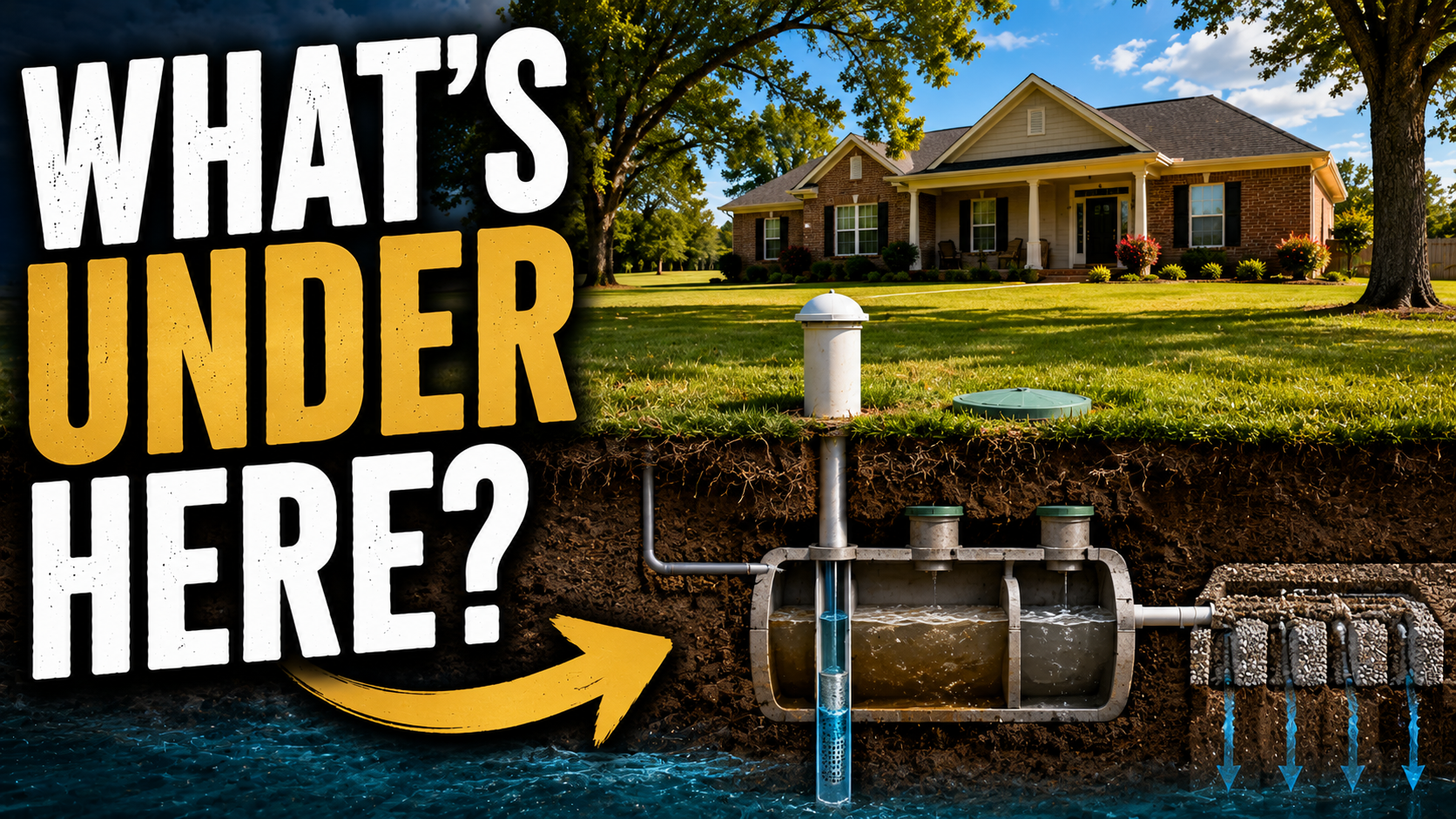
A septic system has two main parts: a buried tank where solids settle, and a drain field (sometimes called a leach field) where the liquid filters back into the soil. When either part fails, you can be looking at thousands of dollars and, in a bad case, raw sewage backing up or surfacing in the yard.
A real septic inspection for a home purchase usually includes:
- Locating and uncovering the tank lid and access ports
- Checking sludge and scum levels, and often pumping the tank so the inspector can see the interior
- Inspecting the tank walls, baffles, and lid for cracks or deterioration
- Running water through the system to confirm it flows and drains correctly
- Walking the drain field for soggy spots, odors, or surfacing effluent
- Confirming the system size roughly matches the number of bedrooms
In Arkansas, onsite wastewater systems are regulated by the Arkansas Department of Health, and septic evaluations should be done by a licensed professional. Ask for the inspection in writing, with photos, so you have a clear record of the system's condition on the day you bought.
What a well inspection and water test cover
A private well inspection looks at two things: whether the equipment works, and whether the water is safe to drink. Those are two separate questions, and you want answers to both.
On the mechanical side, an inspector checks the well cap and casing, the pump and pressure tank, and the flow rate (how many gallons per minute the well actually delivers). A well that produces plenty of water for one household can struggle once a larger family moves in, so flow matters.
On the safety side, a water sample gets sent to a lab and tested for bacteria (like coliform and E. coli), nitrates, and sometimes hardness, pH, and minerals. The federal government does not regulate private wells, so the testing is entirely on the homeowner. The CDC's guidance on private wells recommends testing at least once a year even after you move in, and a purchase is the natural time to start.
If the water comes back with a problem, it is not automatically a deal breaker. Many issues are solved with a treatment system or shock chlorination, and that becomes part of the repair conversation rather than a reason to walk.
What it costs around Jonesboro
These are specialized inspections, so they are priced separately from your general home inspection. As a rough guide for our area:
- Septic inspection: plan for roughly $300 to $700, higher if the tank needs to be pumped or dug out to reach the lid
- Well inspection: roughly $250 to $550 for the mechanical check and flow test
- Water test: often $50 to $200, depending on how many contaminants the lab screens for
Some local companies bundle the well and septic together and bring the price down. These ranges reflect typical regional pricing rather than a fixed quote, so confirm the number with your inspector before you schedule.
It is money worth spending. A failed drain field or a full septic replacement commonly runs into five figures, and a well pump or a treatment system is its own bill on top of that. A few hundred dollars now is cheap insurance against a surprise you inherit at closing.
When your loan requires it
Sometimes the inspection is your choice, and sometimes the lender makes the call for you. Northeast Arkansas has a heavy share of government-backed loans, and several of them have well and septic rules built in.
- USDA loans: the USDA Single Family Housing program generally requires a water quality test on a private well, with the water meeting health standards before the loan can close.
- FHA and VA loans: these programs have their own well distance and water-safety standards, and an appraiser who sees a well or septic system may call for testing or documentation.
- Conventional loans: usually the most flexible, but an individual lender can still require it, especially when the appraisal notes a private system.
Because the loan type drives so much of this, it is worth understanding your financing early. Our breakdown of the USDA, FHA, VA, and conventional options for Jonesboro buyers walks through where each one fits, and your specialist inspections should line up with whatever your lender needs.
One more local note: in Arkansas, you should also plan on a termite letter for almost any financed purchase, which is a separate report again. It is common in our market to stack a few of these specialist checks in the same inspection window.
What to do if the inspection finds a problem
Finding an issue is not the end of the deal. It is the start of a negotiation, and you have real options under the Arkansas contract.
- Ask the seller to repair it before closing, with proof the work was done by a licensed pro
- Ask for a credit or price reduction so you can handle the repair on your own terms after closing
- Get a repair quote first so the conversation is grounded in a real number, not a guess
- Walk away within your inspection window if the cost is too high and the seller will not move
How you frame that request matters, and the same playbook applies whether the finding came from the general inspection or the septic report. Our guide on negotiating inspection repairs as a Jonesboro buyer walks through how to prioritize the items that actually matter and how to write the request so it holds up.
How the timeline works in Arkansas
In Arkansas, your inspection contingency typically gives you a defined window (often around 10 business days) from the date the contract is signed to complete inspections and respond. Well and septic specialists book up, especially in summer, so the clock is the part buyers underestimate.
A simple sequence keeps you out of trouble:
- Schedule the general inspection right away once you are under contract
- Book the well and septic inspections at the same time, not after
- Get the water sample to the lab early, since results take days to come back
- Leave yourself room to ask for repairs before the window closes
With the median Jonesboro list price sitting around $264,000 in mid-2026 and 30-year mortgage rates near 6.5 percent, buyers are being careful with every dollar. Spending a few hundred up front to confirm the well and septic are sound is one of the easier decisions in the whole process.
Frequently Asked Questions
Q: Who pays for the well and septic inspection in Jonesboro?
In most Northeast Arkansas transactions the buyer pays for inspections, including the well and septic checks. It is your due diligence, so you control who does the work and you keep the report. If the inspection turns up a repair, you can then ask the seller to cover or credit that specific item.
Q: Can I skip these inspections to save money or move faster?
You can, but it is a real gamble on a system you cannot see. A failed drain field or a contaminated well can cost far more than the inspection, and your lender may require the testing anyway on a USDA, FHA, or VA loan. Most buyers are better off spending the few hundred dollars and knowing what they are buying.
Q: How often should I test the well water after I move in?
Because no government agency monitors private wells, testing is up to you. A yearly test for bacteria and nitrates is the common recommendation, plus an extra test any time the water changes in taste, color, or smell, or after flooding. Starting at purchase gives you a clean baseline to compare against later.
Under Contract on a Jonesboro Home With a Well or Septic?
Trenton Hoggard, Tim Ray, and the NEA Realtor Group team help buyers across Jonesboro and Northeast Arkansas line up the right inspections, read the reports, and negotiate repairs before the window closes. For perspective, our 5-star reviews and standing as the #1 real estate team in the Northeast Arkansas MLS by production reflect years of getting buyers safely to closing.
Connect with NEA Realtor Group