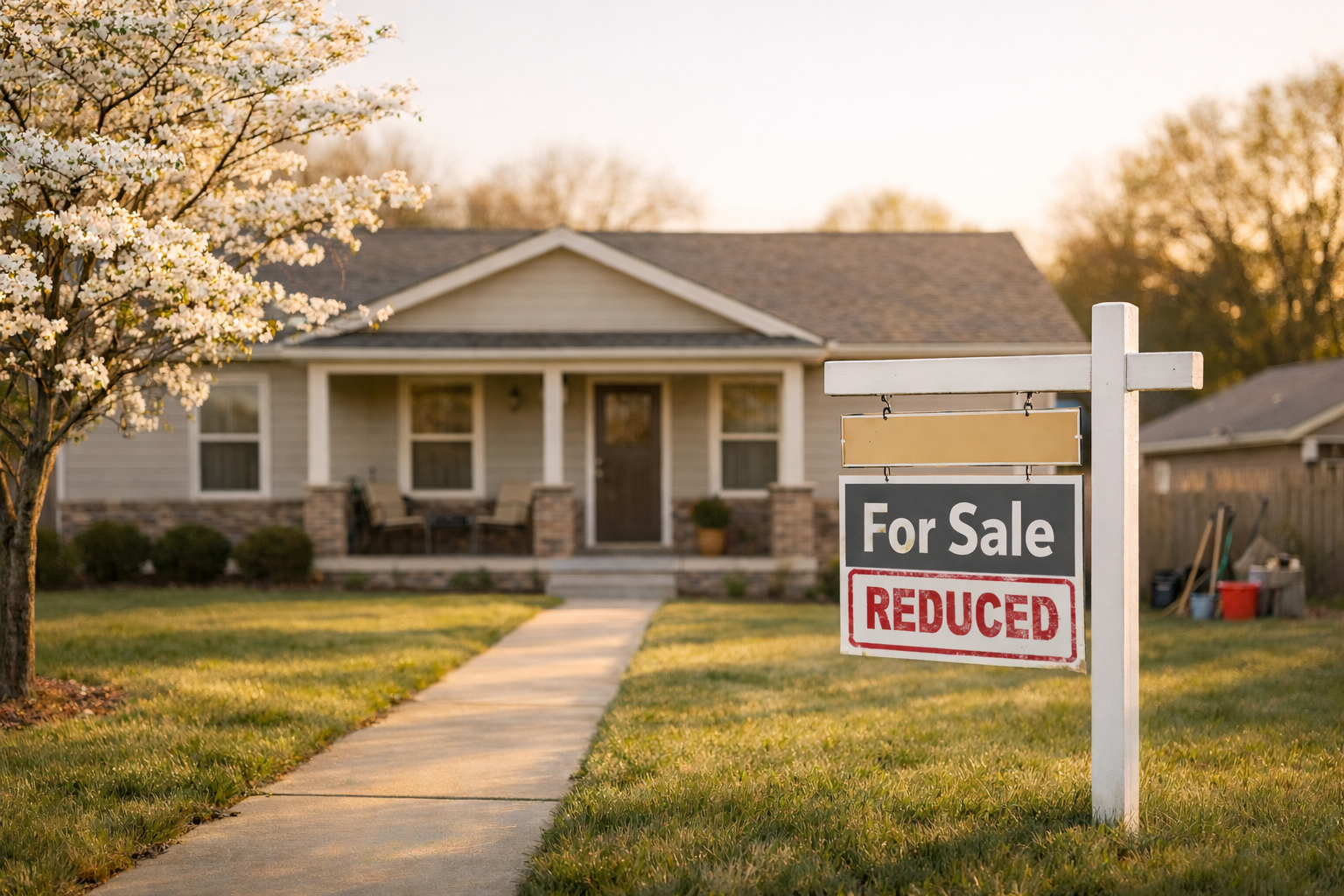
When to Consider a Price Reduction in Jonesboro
When should I reduce the price on my Jonesboro home?
If your Jonesboro listing has been active 14 to 21 days with low showing traffic, no offers, and comparable homes selling around you, it is usually time to revisit price, photos, and exposure before the listing goes cold.
Nobody lists their home hoping to talk about a price cut. But if you have had the sign in the yard for a few weeks and the phone has gone quiet, it is worth stepping back and looking at the data honestly. In Jonesboro and across Northeast Arkansas, a price reduction is not a failure. It is a tool, and used at the right moment, it can turn a stale listing back into a competitive one.
We are Trenton Hoggard and Tim Ray with NEA Realtor Group, and we have walked a lot of sellers through this decision in the Jonesboro market. This post lays out the signals we look at, the timing windows that matter most, and how to think about the size of a reduction so your next move actually changes the outcome.
Why Price Matters More in 2026 Than It Did Two Years Ago
The spring 2026 market is not the frenzy of 2021. Nationally, inventory is higher, days on market are longer, and more sellers are cutting prices than in recent years. According to Realtor.com research, the week of April 12 to 18 is projected as the best week to sell in 2026, with homes historically listing for about 1.3% more and moving faster with fewer reductions than the rest of the year.
Translation for Jonesboro sellers: buyers are still out there, but they are slower, pickier, and very payment-sensitive. A home that would have sold in a weekend in 2021 may need a more careful price strategy now. That means an overpriced listing does not just sit, it actively helps sell the homes around it.
The Signals It May Be Time to Reduce
Price reduction decisions should not come from panic or pride. They should come from the market telling you something. Here are the signals we watch in the first few weeks of a Jonesboro listing.
1. Low showing traffic in the first 10 to 14 days
A newly listed home in Jonesboro should generate a noticeable burst of showings right after it hits the MLS. If you are more than two weeks in and showings are in the low single digits, that is usually a price problem, not a buyer problem. Buyers screen on price first, photos second, location third. When price is off, they never even click through.
2. Showings but no offers
This one is more nuanced. If you are getting a steady flow of showings but no written offers, buyers are telling you the home is interesting enough to tour but not compelling enough at that price. Sometimes that means condition, sometimes photos, and sometimes a small price adjustment is the unlock. Agent feedback from showings is gold here.
3. Comparable homes are going under contract and yours is not
Drive your own competition. If homes in your school zone, subdivision, or price band are going pending while your sign stays put, the market is choosing theirs over yours for a reason. In Jonesboro and Northeast Arkansas, lower transaction volume means comps may need to pull from the last 90 to 180 days, but the relative story is still the same: if your neighbors are selling and you are not, price is usually the lever.
4. The listing has gone quiet after 21 to 30 days
A listing has a natural lifecycle. The first two to three weeks are when most of the serious buyer attention happens. After 30 days on market with no offers, buyers start to assume something is wrong with the home. That psychological shift alone costs you leverage, which is why we would rather move decisively at day 21 than drag things out to day 60.
5. An appraisal came in low on a prior offer
If you had a deal fall apart because the appraisal did not support the contract price, that is the market handing you real data. We wrote more about this in our post on what Jonesboro sellers need to know about appraisals, but the short version is: a low appraisal is often a signal that the list price needs to move closer to where comps actually support.
The Timing Windows That Matter
Timing a reduction is almost as important as the number itself. Here is how we generally think about the windows in a Jonesboro listing:
- Days 1 to 14: Hold the price. Watch showings, saves, and agent feedback closely. This is your highest-leverage window, when your listing is newest in the feeds.
- Days 14 to 21: Review the data honestly. If showings are low and feedback keeps pointing at price, start planning your move.
- Days 21 to 30: This is usually the right window for a first reduction if the signals are clear. Acting here keeps you in front of active buyers before your listing goes stale.
- Days 30 to 60: A reduction here needs to be decisive. Small, nervous trims rarely reset buyer interest once a home has sat.
- Beyond 60 days: Consider a full relaunch strategy, not just a price change. That may mean new photos, refreshed marketing, and a meaningful price move at the same time.
How Much Should You Actually Reduce?
One of the most common mistakes we see in Jonesboro is the tiny, hopeful reduction. A seller drops the price by $2,000 on a $325,000 listing and waits. Buyers do not notice. Two weeks later, another $2,000. Still nothing. Now the home has three reductions on its history, still no offers, and the seller has trained the market to wait for the next cut.
A price reduction should do two things at once: move your home into a new search bracket and visibly reset buyer perception. Practically, that often means a cut of 2% to 5% in one move, landing at a round number that pulls in new search filters, such as going from $329,900 to $319,900 or from $279,500 to $269,000. Buyers search in price bands, and a well-placed reduction can suddenly put your home in front of an entirely new pool of shoppers.
The right size depends on the gap between your current list price and where real comps are landing. That is a conversation to have with your agent, not a rule of thumb to apply blindly.
Before You Cut, Rule Out the Non-Price Fixes
Sometimes the price is not actually the problem. Before recommending a reduction, we look at three other things first.
Photos and presentation. Listing photos are the thumbnail that decides whether a buyer clicks at all. If the photos feel dim, cluttered, or dated, a price cut will not fix a click-through problem. Fresh, well-lit photos and a quick reshoot can change the click-through rate before you ever touch the number.
Exposure and marketing. Is the listing actually getting in front of buyers? For every listing, we run dedicated direct mail campaigns targeted to the neighborhood, plus social promotion across Facebook, Instagram, and YouTube. A home that is not being marketed actively will stall at any price.
Showing access. If buyers cannot easily tour the home because the schedule is restrictive, you are narrowing the funnel before price ever becomes the issue. Easy, flexible access is one of the cheapest ways to lift showing volume.
If all three of those boxes are checked and you are still not getting traction, price is very likely the remaining lever. For a deeper diagnostic on stalled listings, see our post on why your Jonesboro home is not getting showings and how to fix it.
What a Price Reduction Actually Costs You (and What It Does Not)
Sellers often resist a reduction because it feels like losing money. But the real cost of an overpriced listing is almost always larger than the cut itself. Carrying costs, mortgage interest, insurance, utilities, and the quiet pressure of an empty or staged home all add up month after month. And stale listings usually end up selling for less than if the seller had repositioned early.
According to National Association of REALTORS research, homes that sit longer on the market typically close below their original list price, while homes that go under contract in the first two to three weeks tend to land much closer to asking. In other words, the goal is not to hold out for the perfect number. The goal is to attract a qualified buyer during the window when your listing still has momentum.
The Jonesboro Angle: Lower Volume, Slower Feedback
One thing that makes pricing in Jonesboro and broader Northeast Arkansas different from a big metro is the volume of transactions. On any given week, there may only be a handful of sales in your price band and neighborhood, which means the data comes in slower and comps may need to pull from the last 90 to 180 days to paint a full picture.
Because of that, we lean heavily on real-time signals, showing counts, agent feedback, saves on the listing, and activity on comparable homes, rather than waiting six weeks for closed comps to confirm what the market is already telling us. In a thinner market, acting on the early signals is often more important than the last decimal point of accuracy.
How to Have the Price Reduction Conversation With Your Agent
A good agent should be bringing this conversation to you before you have to chase it down. When we sit down with a seller to talk reductions, we walk through a simple process:
- Review the showing and feedback log since listing day.
- Pull a fresh set of comps and pending sales in the neighborhood.
- Identify any non-price issues first (photos, access, marketing).
- Discuss a reduction that is large enough to matter and lands at a strategic search-bracket number.
- Relaunch the listing with a short marketing push, not just a quiet MLS update.
That last point matters. A price change on its own is a line in the MLS history. A price change paired with renewed marketing, fresh social, direct mail, and proactive outreach to buyer agents is an event.
Frequently Asked Questions
Q: How long should I wait before considering a price reduction?
For most Jonesboro listings, the honest review window is around 14 to 21 days. If showings are low or feedback keeps pointing at price, waiting longer rarely helps. Moving between days 21 and 30 is usually the sweet spot for a first reduction.
Q: How much should I reduce the price by?
Small, hopeful cuts rarely work. A reduction in the 2% to 5% range, landing at a round number that puts your home into a new search bracket, tends to reset buyer interest more effectively than repeated tiny trims.
Q: Will buyers assume something is wrong if I reduce the price?
The opposite is more common. Buyers who were already watching your home see a meaningful drop as an invitation to act, and new buyers in the lower bracket see it as a fresh listing. What damages perception is a long, stale listing with multiple small cuts, not one decisive move.
Q: Should I wait for the market to improve instead of cutting?
For most Jonesboro sellers, waiting is not a strategy. Carrying costs keep running and buyer attention is hardest to win after the first month. A right-priced listing today usually outperforms a hopeful listing six months from now.
Q: Can a price reduction be avoided entirely?
Often, yes, by pricing the home correctly from day one. That is why we spend serious time on a full comparative market analysis and a pricing strategy conversation before we ever put a sign in the yard.
If your Jonesboro home has been sitting and you are not sure whether the right answer is a price cut, better photos, more marketing, or a full relaunch, we would rather sit down and look at the data with you than guess. Trenton Hoggard and Tim Ray have helped hundreds of families across Jonesboro and Northeast Arkansas get unstuck, reposition smartly, and get to closing. You can see what past clients have said about working with us in our Google reviews for NEA Realtor Group.
Thinking About a Price Adjustment on Your Jonesboro Home?
Trenton Hoggard and Tim Ray with NEA Realtor Group will walk through your listing data, pull fresh comps, and help you decide whether a reduction, a relaunch, or a different move makes the most sense.
Connect with NEA Realtor Group