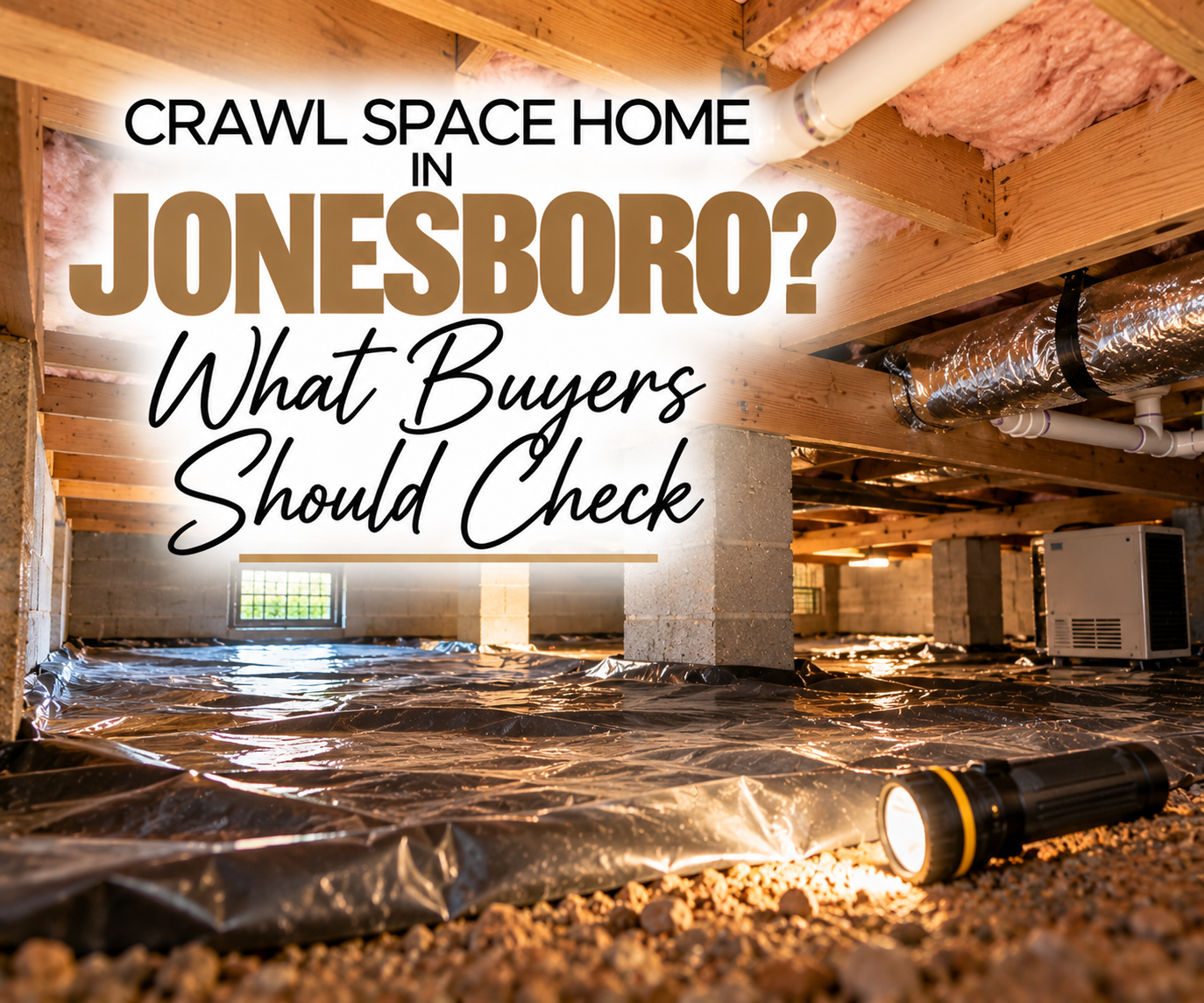
Crawl Space Home in Jonesboro? What Buyers Should Check
What should you check before buying a crawl space home in Jonesboro?
Before buying a crawl space home in Jonesboro, have the crawl space inspected for moisture, ground cover, wood damage, and pests, then use the findings to negotiate or walk away.
Most Jonesboro homes built on a raised foundation have a crawl space, and it is the part of the house almost no buyer sees during a showing. You walk the rooms, check the kitchen, and picture your furniture. The crawl space sits a few feet below your shoes, holding the plumbing, the ductwork, the floor framing, and often the biggest repair bill in the house.
If you are under contract or about to write an offer, the crawl space deserves its own plan. A few well-chosen questions now can save you from a surprise in the spring rainy season.
We are NEA Realtor Group (Trenton Hoggard and Tim Ray), and we walk Jonesboro buyers through crawl space homes regularly. If you are still organizing your search, our home buying page is a good place to start. This post is for the buyer who found a house, likes it, and just learned what is underneath it.
Why the Crawl Space Matters More Than It Looks
A crawl space is not just empty room under the floor. It is where moisture, wood, and pests meet, and problems there rarely stay there.
Water that collects under a house can rot floor framing, ruin insulation, feed mold, and invite wood-destroying insects. Floors that feel soft, doors that stick, and a musty smell inside can all trace back to what is happening below.
The Pacific Northwest National Laboratory's Building America Solution Center lists standing water, rusty pipes or nails, damp or sagging insulation, mold on wood, and a torn or missing ground vapor barrier among the common warning signs of a crawl space moisture problem. Those are the same things a good inspector looks for.
The good news: many crawl spaces are in fine shape, and many problems are fixable. Your job as a buyer is to find out which kind you are buying before the inspection window in your contract closes.
What to Look For in a Jonesboro Crawl Space
You do not need to crawl under the house yourself. You do need to know what your inspector should be checking, so you can ask the right questions and read the report with confidence.
Moisture and standing water
- Standing water, puddles, or damp soil, especially after a heavy rain
- Water stains on the foundation wall or a white, chalky residue on masonry
- Rust on pipes, nails, or metal supports
- A musty odor coming from the floor vents or the access panel
Northeast Arkansas gets humid summers and heavy spring storms, so moisture is the first thing to ask about. If you can, ask the seller whether water has ever collected under the house and whether anything was done about it.
Ground cover and drainage
- Is there a plastic vapor barrier on the soil, and is it intact, or torn and pushed aside?
- Do gutters and downspouts carry water away from the foundation, or dump it beside the wall?
- Does the yard slope toward the house or away from it?
- Is there a sump pump or drain system, and does it work?
Drainage outside the house often explains moisture inside the crawl space. A repair under the house that ignores the yard usually does not last.
Wood, framing, and structure
- Dark, soft, or crumbling wood on joists, beams, and the subfloor
- Sagging floor joists or a floor that bounces inside the home
- Piers or supports that lean, crack, or look shifted
- Previous repairs, such as added posts or sistered joists, and whether anyone can explain them
Ask the inspector to tell you whether any damage is old and stable or active and getting worse. That one answer changes how you negotiate.
Insulation, ductwork, and plumbing
- Insulation hanging down, soaked, or missing in sections
- Heating and cooling ducts that are crushed, disconnected, or lying in damp soil
- Drain lines or supply lines that drip, sag, or show patched leaks
- Signs of a past plumbing leak, such as stained wood directly under a bathroom or kitchen
Pests and access
- Mud tubes, damaged wood, or other signs of wood-destroying insects
- Rodent droppings or nesting material in the insulation
- Foundation vents that are blocked, broken, or missing screens
- An access opening that is large enough and clear enough for an inspector to enter
If the access is blocked by stored items or sealed shut, ask the seller to clear it right away. An inspector who cannot get in cannot report on what is there, and you do not want a gap in your inspection.
How to Get the Crawl Space Inspected
A standard home inspection should include the crawl space, but confirm that in writing before you schedule. If you want a walkthrough of the process, we cover what happens during the home inspection in a separate post.
Ask your inspector these questions up front:
- Will you physically enter the crawl space, or only look in from the access opening?
- Will the report include photos of what you find under the house?
- Do you measure moisture in the wood, or only look for visible signs?
- If you see something concerning, can you explain whether it needs a specialist?
In Northeast Arkansas, a standard home inspection typically runs $500 to $1,000. Larger homes, difficult crawl spaces, and add-on services can push the fee to $800 to $1,200 or more. That is a small cost compared with a structural repair.
Do not forget the termite letter. In Arkansas, plan on a termite letter for almost any financed purchase in Jonesboro. The main exceptions are an in-house bank loan or paying cash. The termite inspector looks at the same wood your home inspector does, so the two reports often point to the same trouble spots.
If either report calls for a specialist, such as a foundation, drainage, or moisture contractor, get the specialist out before your inspection period ends. A written bid from a licensed contractor gives you real numbers to negotiate with instead of guesses.
What the Findings Mean for Your Offer
Once the reports are in, you generally have four paths. Which one fits depends on how serious the problem is and how much you like the house.
- Move forward as is. The crawl space is dry, sound, and clean, or the issues are minor and you are comfortable handling them.
- Ask for repairs. The seller fixes specific items before closing, ideally with receipts or a written warranty from the contractor.
- Ask for a credit or price change. You take the repair on yourself and use the bid to support the number you request.
- Walk away. Active structural damage, repeated water intrusion, or a seller who will not engage can be good reasons to move on, if your contract still allows it.
Our post on negotiating inspection repairs walks through how to word a request and how sellers tend to respond. The short version: bring documentation, ask for specific items, and keep the tone calm.
A few cautions as you decide:
- Cosmetic fixes are not repairs. Fresh insulation over a wet floor hides the problem and does not solve it.
- Ask what caused the problem, not just what the damage looks like. A repair that ignores the cause can fail again.
- Ask for contractor paperwork on any past work, and ask who stands behind it.
- Your lender will have its own requirements. If the appraiser flags a moisture or structural concern, the loan may be affected, so raise it with your lender early.
If you need help weighing a repair bid against the price of the home, Trenton Hoggard and Tim Ray can look at it with you and compare it to what is happening with similar homes nearby.
What the Current Market Means for Your Negotiation
Borrowing costs are still a big part of the math. Freddie Mac reported the average 30-year fixed rate at 7.40% on October 15, 2026, unchanged from the week before and up from 6.27% a year earlier. At that rate, even a modest repair credit or price adjustment changes your monthly payment less than most buyers expect, but it can change your cash needed at closing.
On the local side, Redfin showed a median sale price near $235,000 in Jonesboro for the three months ending August 2026, with homes selling at about 97.7% of list price and a median of 55 days on the market. That tells us buyers in Jonesboro still have room to negotiate, which is helpful when an inspection turns up real issues.
Keep in mind that these are broad figures. Every house is different, and a home with a dry, well-kept crawl space can hold its price better than one with open questions.
A Simple Crawl Space Checklist for Buyers
- Before you write the offer, ask the listing agent whether the seller knows of past water, drainage, or pest problems.
- Confirm the access opening is clear and ready for the inspector.
- Schedule the home inspection and termite inspection as early as your contract allows.
- Ask for photos of the crawl space in the written report.
- Get written bids for anything that needs a specialist.
- Decide on repairs, credit, or walking away before your inspection period expires.
- Do a final walkthrough to confirm agreed repairs are complete.
Frequently Asked Questions
Q: Does a home inspection in Jonesboro include the crawl space?
A standard inspection should include the crawl space when it is safely accessible. Confirm in writing that your inspector will enter it and include photos, because some inspectors only look in from the opening.
Q: Is a damp crawl space a deal breaker in Northeast Arkansas?
Not always. Minor dampness with a clear cause and an affordable fix can be manageable. Standing water, rotted framing, or repeated moisture problems deserve a specialist bid before you decide.
Q: Can I ask the seller to fix crawl space problems after the inspection?
Yes. You can request repairs, a credit, or a price change within the time frame in your contract. Bring the inspection report and any contractor bids so the request is specific and easy to evaluate.
For perspective, NEA Realtor Group has earned 5-star reviews and is the #1 real estate team in the Northeast Arkansas MLS by production.
Found a Crawl Space Home You Like?
Call or text us at 870-273-0633. Trenton Hoggard and Tim Ray of NEA Realtor Group will help you read the inspection findings, weigh your options, and negotiate with confidence in Jonesboro.
Connect with NEA Realtor Group