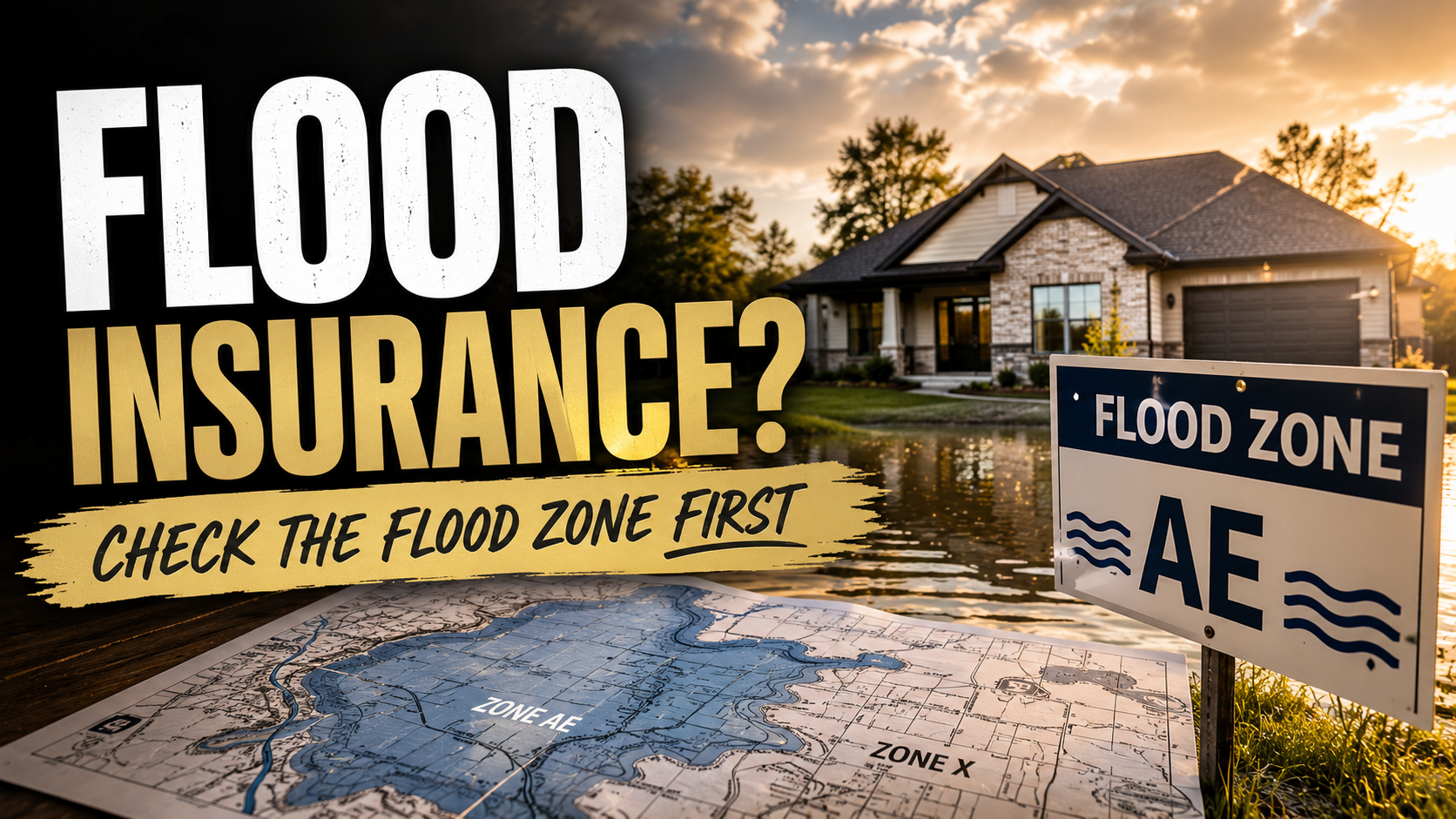
Do You Need Flood Insurance to Buy in Jonesboro?
Do you need flood insurance to buy a home in Jonesboro?
Not every Jonesboro home does. If the property sits in a FEMA Special Flood Hazard Area and you have a federally backed mortgage, your lender will require it, so check the flood zone before you make an offer.
You found a Jonesboro home you like, the numbers work, and then your lender mentions flood insurance. Suddenly there is a cost you did not budget for and a question you cannot ignore: is this home actually in a flood zone, and what does that mean for your purchase?
At NEA Realtor Group, Trenton Hoggard and Tim Ray walk buyers through this question often, because Jonesboro and the surrounding Northeast Arkansas area have real flood-zone pockets. Learning to read a flood map before you write an offer is one of the most practical parts of buying a home here.
The short version: flood insurance is not automatic, and it is not the same as your regular homeowners policy. Whether you need it comes down to where the home sits on the FEMA map and how you are paying for the purchase.
What a Flood Zone Actually Means
FEMA maps nearly every area in the country into flood zones based on how likely that ground is to flood. When people ask if a home is "in a flood zone," they usually mean one of two things: a high-risk area or a lower-risk area.
- High risk (Special Flood Hazard Area, or SFHA): Zones that start with the letter A (A, AE, AH, AO) and, in rare cases here, V. A property in an SFHA has roughly a 26 percent chance of flooding over the life of a 30-year mortgage.
- Moderate to low risk: Zone X (sometimes shown as shaded X). Flooding is less likely, but it is not impossible.
In and around Jonesboro, the zones you will see most often are AE, A, and X. The label matters because it drives both whether you must carry flood insurance and what it is likely to cost.
There is a local reason flood zones come up here. Jonesboro sits on and around Crowley's Ridge, and water drains off the ridge into the flatter Mississippi Alluvial Plain that surrounds it. Low-lying spots and areas near creeks, bayous, and drainage channels can hold water after heavy rain. Buyers looking at acreage or rural property across Northeast Arkansas, especially near waterways, run into flood-zone questions more than most. Even two lots in the same subdivision can carry different designations if one sits a few feet lower or backs up to a drainage easement, which is why the address-level check below matters so much.
When Flood Insurance Is Required, and When It Is Not
Here is the part that decides whether this is a must-have or a choice for you.
- Federally backed loan plus an SFHA: If you are using a conventional loan (backed by Fannie Mae or Freddie Mac), FHA, VA, or USDA financing, and the home sits in a high-risk zone, your lender will require flood insurance for the life of the loan. This is not negotiable with the lender.
- Zone X (low to moderate risk): Flood insurance is usually optional. It is still available, and in lower-risk zones it is often inexpensive, which is worth considering even when no one is forcing the issue.
- Cash buyers: No lender means no one requiring a policy. You carry the risk yourself, so the decision is entirely yours.
One point trips up a lot of buyers: a standard homeowners policy does not cover flood damage. Flood is a separate policy. When you line up your homeowners insurance before closing, treat flood coverage as its own line item rather than assuming it is bundled in.
What Flood Insurance Costs in Northeast Arkansas
Cost is the question every buyer wants answered, and the honest answer is that it depends on the specific property. Two homes on the same street can carry very different flood insurance costs.
The main source of flood insurance is the National Flood Insurance Program (NFIP), run through FEMA, though a growing number of private flood insurers compete on price too. Across Arkansas, the average NFIP policy runs around $991 per year as of early 2026, but that average hides a wide range. Lower-risk Zone X policies are often well below that figure, while some high-risk properties cost more. The takeaway is simple: do not assume the number from a friend's house, a listing remark, or a national headline applies to the specific home you are buying.
Since 2023, FEMA has priced NFIP policies under a system called Risk Rating 2.0, which sets each property's rate based on its own characteristics rather than broad zone tables. The factors that move your number include:
- How high the home sits relative to the base flood elevation
- Distance to the nearest creek, bayou, or drainage channel
- The foundation type and the cost to rebuild the home
- Any history of prior flood claims on the property
- The coverage amount and deductible you choose
Build that cost into your monthly housing math, the same way you would property taxes and your regular insurance. With the 30-year fixed mortgage rate sitting near 6.47 percent in mid-June 2026, every recurring cost affects how much home you qualify for, so it is better to know the flood number early than to discover it during underwriting. In a lower-volume market like Northeast Arkansas, where comparable sales sometimes pull from the last 90 to 180 days, a clear monthly budget also helps you write a confident, realistic offer.
How to Check a Jonesboro Home's Flood Risk Before You Offer
You do not have to wait for the lender to tell you. You can check flood risk yourself, and you should do it before you remove contingencies on a home anywhere across Jonesboro.
- FEMA Flood Map Service Center: Search the property address at the FEMA Map Service Center to see the official flood zone for that parcel.
- Local floodplain office: The Craighead County floodplain office and the City of Jonesboro floodplain management staff can confirm the designation for a specific lot, which helps when a property straddles a zone line.
- Seller's disclosure: The seller's property disclosure may note past water intrusion or flooding. Read it closely, and pay attention to the lower level, the crawlspace, and the yard during your home inspection.
- Elevation certificate: If a home sits above the base flood elevation, an elevation certificate can sometimes lower the cost. It is worth asking whether one already exists.
Do this during your due-diligence window, not after you close. Once you own the home, the flood designation and the cost that comes with it are yours to manage.
Your Options if the Home Is in a Flood Zone
Finding out a home is in a flood zone is not a reason to panic. Plenty of well-built, comfortable homes across Northeast Arkansas sit in mapped flood areas, and people own them happily for decades. It just means you make an informed decision instead of a surprised one.
- Proceed and budget the cost. Get real quotes from both NFIP and a private insurer so you know the actual monthly number before you commit.
- Negotiate. You can ask the seller for a credit, or factor the added cost into the price you offer.
- Use your contingencies. If the cost or the risk does not work for you, the inspection and financing periods give you room to renegotiate or walk away.
This is exactly the kind of decision we help buyers price out. When a Jonesboro home you are considering falls in a flood zone, we help you get quotes, weigh the long-term cost, and decide whether to move forward, renegotiate, or keep looking.
Frequently Asked Questions
Q: Does every home in Jonesboro need flood insurance?
No. It is required only when a home sits in a high-risk Special Flood Hazard Area and you are using a federally backed mortgage, or when you choose to carry it yourself. Many Jonesboro homes are in lower-risk Zone X, where coverage is optional.
Q: Will my regular homeowners policy cover a flood?
No. Standard homeowners policies exclude flood damage. To be covered, you need a separate flood policy through the NFIP or a private flood insurer.
Q: Can I check a property's flood zone myself before I make an offer?
Yes. FEMA's Flood Map Service Center lets you search by address, and the Craighead County floodplain office can confirm the designation for a specific parcel. Checking early saves you from surprises during underwriting.
Buying in Jonesboro and Want a Clear Answer on Flood Risk?
Trenton Hoggard, Tim Ray, and the NEA Realtor Group team help buyers across Jonesboro and Northeast Arkansas check flood zones, get real insurance quotes, and decide with confidence. For perspective, we hold dozens of 5-star reviews and are the #1 real estate team in the Northeast Arkansas MLS by production.
Connect with NEA Realtor Group