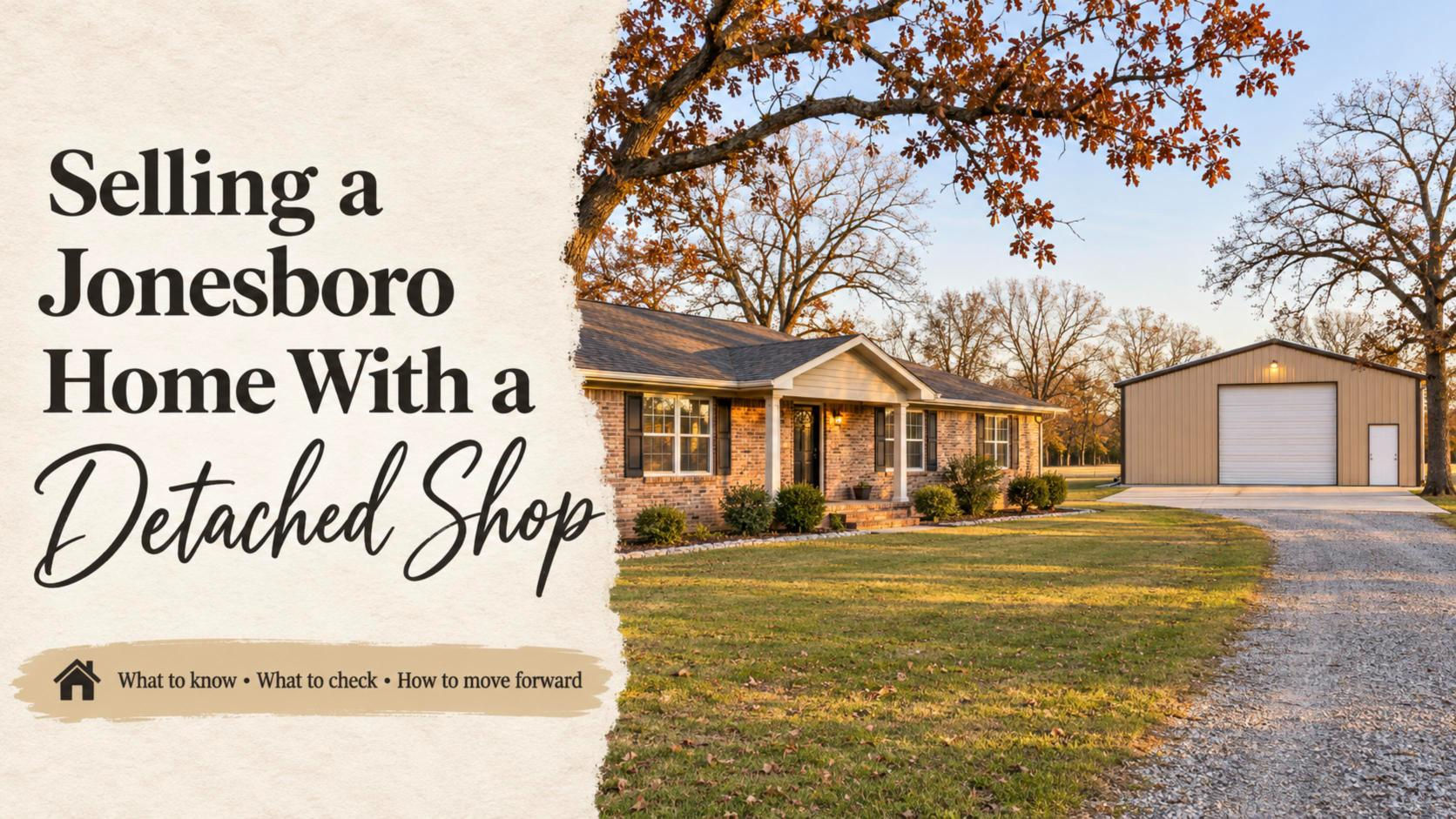
Selling a Jonesboro Home With a Detached Shop
How do you sell a Jonesboro home with a detached shop?
Document the shop's size, power, and permits, decide what equipment stays, price it from local comps that have shops, and market it to the buyers who want one. Appraisers rarely credit a shop at what it cost to build.
A detached shop is one of the features Jonesboro buyers ask about by name. A 30x40 metal building with a roll-up door, real power, and a concrete floor can be the reason a buyer picks your house over three others.
It can also be the reason a deal gets complicated. At NEA Realtor Group, Trenton Hoggard and Tim Ray help sellers plan for the shop before the listing goes live as part of our home selling process, because the questions about value, appraisal, and what conveys are much easier to answer in November than in the middle of an inspection period.
Here is how to get the shop working for your sale instead of against it.
Why a Shop Is Worth Less on Paper Than It Cost You
This is the part most shop owners do not want to hear, so we will start with it. What you spent building the shop and what an appraiser gives you for it are usually two different numbers.
Appraisers value a shop by what buyers in your area have actually paid for similar properties, not by your receipts. That is called contributory value, and it depends on how common shops are in your part of the market and how much comparable homes with shops sold for.
- Shop square footage does not count as living area. A detached shop is reported separately from the home's finished square footage, even if it is heated, cooled, and nicer than some garages.
- Typical shops get credit. On a country lot or acreage tract where shops are common, the appraiser can usually find comps with similar buildings and support an adjustment.
- Unusual shops get less. A very large shop on a small in-town lot, or one built for a specific business, may get little added value because few comparable sales exist.
For conventional loans, Fannie Mae's appraisal guidelines say outbuildings need special review to confirm the property is still residential. Small barns and similar buildings are fine when comps show they are typical. An atypical outbuilding is acceptable as long as the appraisal gives it little or no contributory value. Large barns, storage facilities, and buildings for farm animals get closer scrutiny.
None of that means the shop is worthless. It means the value shows up through the right buyer and the right pricing strategy, not through a line item that matches your construction cost. If you want more background on how this works, read our guide on what Jonesboro sellers need to know about appraisals.
Gather the Shop's Paperwork Before You List
Buyers who want a shop ask detailed questions. Having the answers ready makes your listing more credible and gives the appraiser something concrete to work with.
- Exact size: Outside dimensions, eave height, and door sizes. "30x40 with 14-foot walls and a 12x12 roll-up door" sells better than "big shop."
- Construction details: Metal, wood frame, or block, slab thickness if you know it, insulation, and the year it was built.
- Electrical service: Whether the shop has its own panel, its amperage, 220-volt outlets, and whether it is on its own meter.
- Utilities: Water, a bathroom, a heater, a mini-split, or any plumbing tied to the home's septic or sewer.
- Permits: If the shop is inside city limits, any building and electrical permits pulled when it was built. Outside the city, any county or utility records you have.
- Receipts and warranties: Builder invoices, roof or door warranties, and any transferable paperwork.
If the shop or its wiring was added without permits, do not hide it. Disclose it, and talk with us early about your options, because buyers and inspectors tend to find it anyway.
Check the survey and setbacks
A shop that sits close to a property line can turn into a title or survey question. If you have a recent survey, pull it out and confirm the shop is on your side of the line and clear of any easements. If you do not have one, it is worth knowing that a buyer's lender or title company may order one.
Decide What Stays in the Shop
Shops are full of things that blur the line between fixtures and personal property. That is where a lot of last-minute arguments come from.
As a general rule, anything bolted down, wired in, or plumbed in is treated as part of the property unless your contract says otherwise. Things that sit on the floor or plug into an outlet usually go with you. Common gray areas include:
- Car lifts bolted to the slab
- Hard-piped air compressors and air lines
- Built-in workbenches, shelving, and cabinets
- Wall-mounted heaters, fans, and mini-split units
- Welders, tool chests, and anything on wheels
Decide before you list. If the lift is going with you, say so in the listing and plan to patch the anchor holes. If it stays, put it in the contract so the buyer and appraiser both know. We cover the bigger picture in our post on what stays and what goes when you sell in Jonesboro.
Get the Shop Ready for Photos and Showings
Buyers who want a shop will walk straight to it. Buyers who do not care about one still need to see that it is not a project.
- Clear the floor. Move vehicles, trailers, and stacked boxes out so buyers can see the full footprint.
- Fix the obvious items. A roll-up door that sticks, burned-out lights, or a leaking roof panel will show up on the inspection report.
- Clean up the outside. Mow around the building, clear the gravel drive, and haul off scrap piles.
- Label the power. A labeled panel tells a buyer the shop was built and maintained with care.
Plan for the buyer's inspector to look at the shop too. In Northeast Arkansas, a standard home inspection typically runs $500 to $1,000, and extra buildings can add time and cost. Fixing small items up front keeps the repair list shorter.
How to Price a Jonesboro Home With a Shop
Pricing is where the shop matters most. Price it too high because of what you spent, and the home sits. Ignore it, and you leave money on the table.
Based on NEABOR MLS closed sales over the past 12 months, Jonesboro homes sold for a median of about 97% of their original list price, and roughly two out of three sold below that original price. Homes priced at $400,000 and up took a median of about 48 days on market, compared with about 34 days across Jonesboro overall. Overpricing a shop property tends to show up as extra time on market and a price cut later.
Here is how we approach it:
- Find comps with shops. Our market has lower sales volume than big metros, so we often pull comparable sales from the last 90 to 180 days to find enough homes with similar buildings.
- Compare to homes without shops. The difference between the two groups is the best evidence of what buyers here pay for a shop.
- Give the appraiser your comps. We share the comps and the shop details with the appraiser so the building is described accurately.
- Think about the land. On acreage, the shop is often part of a package buyers want. Browse current homes on acreage to see how similar properties are being marketed.
Market conditions matter here too. The National Association of REALTORS® reported that existing-home sales fell 5.5% in October to a 3.75 million annual pace, with national inventory at a 5.1-month supply. And Freddie Mac's weekly survey put the 30-year fixed rate at 7.11% as of November 12. Buyers have more choices and higher payments than a few years ago, so a shop property needs to be priced where the payment still makes sense.
Market the Shop to the Buyers Who Want It
The buyer who pays for a shop is usually someone who already knows they want one: a mechanic, a woodworker, a boat or RV owner, a small contractor, or a family with a lot of toys.
- Lead with it. Put the shop's size and features in the first lines of the listing remarks, where search sites and AI tools pick them up.
- Photograph it properly. Exterior, interior with the doors open, the panel, and an aerial view showing how it sits on the lot.
- Use direct mail. NEA Realtor Group sends a dedicated direct mail campaign for every listing, which helps reach nearby owners and move-up buyers who may be watching for exactly this kind of property.
- Be clear about use. Listing language should describe a residential shop or workshop. If you ran a business from it, do not market it as commercial space, which can raise appraisal and zoning questions.
Frequently Asked Questions
Q: Does a detached shop add value to a Jonesboro home?
Usually yes, but rarely dollar for dollar. Appraisers base the shop's value on what buyers have paid for comparable homes with shops, so a typical shop on a country or acreage lot tends to get more credit than an oversized or specialized one in town.
Q: Is the square footage of my shop included in my home's square footage?
No. A detached shop is listed separately from the home's finished living area, even if it is heated and cooled. List its dimensions on their own so buyers see exactly what they are getting.
Q: Do I have to leave my car lift or air compressor when I sell?
Equipment that is bolted down, wired in, or hard-piped is often treated as part of the property unless the contract excludes it. Decide before you list, and spell it out in the listing and the contract to avoid disputes.
Selling a Jonesboro Home With a Shop?
For perspective, NEA Realtor Group has 5-star reviews and is the #1 real estate team in the Northeast Arkansas MLS by production. Trenton Hoggard and Tim Ray can help you document the shop, price it from the right comps, and get it in front of the buyers who want it. Call or text us at 870-273-0633.
Connect with NEA Realtor Group