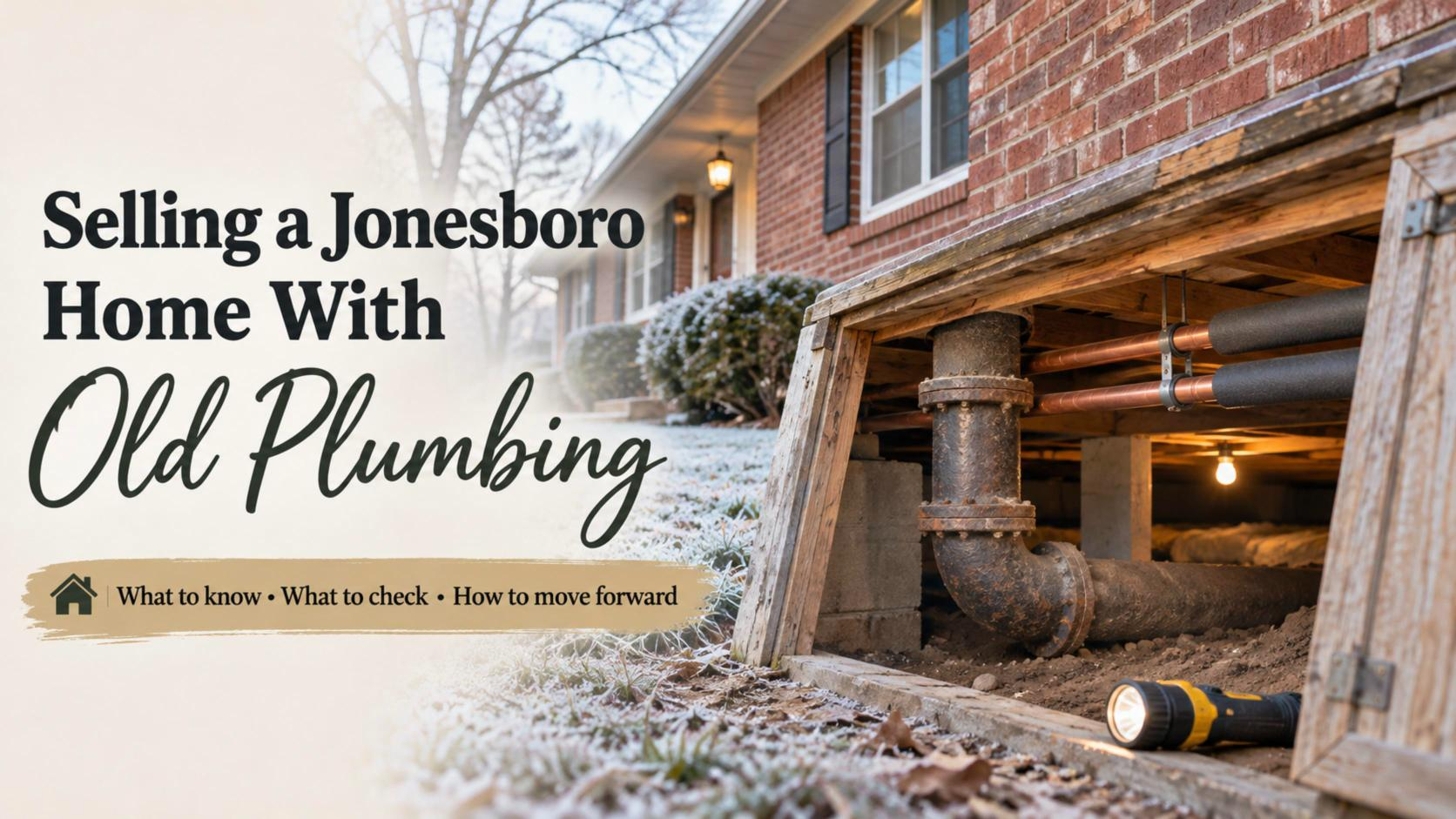
Selling a Jonesboro Home With Old Plumbing
Can you sell a Jonesboro home with old plumbing or an aging sewer line?
Yes. Learn what pipes you have, disclose what you know, consider a sewer scope, then decide to repair, credit, or price for it before buyers inspect.
You are getting ready to list your Jonesboro home, and something about the plumbing is bugging you. Maybe the house still has some galvanized lines, the bathroom drain has been slow for years, or a plumber once mentioned the word "polybutylene" and you never followed up.
Plumbing is one of the systems buyers and inspectors pay close attention to, and the sewer line is the part almost nobody can see. At NEA Realtor Group, Trenton Hoggard and Tim Ray help sellers sort out these questions before the first showing, because the surprise usually costs more than the problem. If you are early in the process, our home selling toolkit walks through every step from pricing to closing.
Here is how to approach older plumbing so it does not derail your sale in Northeast Arkansas, especially heading into winter.
Why Plumbing Gets So Much Attention From Buyers
Water problems spread. A small leak behind a wall can turn into rot, mold, or damaged flooring, and buyers know that.
Redfin's list of things that can fail a home inspection includes outdated or failing plumbing, and it calls out galvanized steel and polybutylene pipes as materials prone to corrosion and failure. The same article notes that a big share of repiping cost comes from opening and repairing walls, tile, and finishes, not just the pipe itself.
That is why a plumbing note on an inspection report can feel bigger to a buyer than it really is. Your job as a seller is to know the facts first, so the conversation stays calm and specific.
Step One: Find Out What Pipes You Actually Have
Most sellers are not sure what is inside their walls. A quick look in a few places tells you a lot.
- At the water heater: look at the pipes coming in and out. Copper, PEX (flexible plastic, often red, blue, or white), CPVC, galvanized steel, or gray polybutylene are the usual suspects.
- Under sinks: check the supply lines and shutoff valves for corrosion, mineral crust, or drips.
- In the crawl space: many Jonesboro homes sit over a crawl space, which makes it easier to see supply lines and drain pipes, and also where leaks tend to hide.
- Where the main line leaves the house: a cleanout near the foundation can give a plumber access to the sewer line.
- Your records: receipts for repiping, water heater replacement, sewer repairs, or past leak repairs are worth gathering now.
If the house has been partly updated, it is common to find a mix of materials. That is fine. You just want to know which parts are newer and which are original.
The Materials Buyers Ask About Most
- Galvanized steel: common in older homes. Over time it can corrode from the inside, which shows up as low water pressure or rusty water.
- Polybutylene: a gray plastic supply line used in many homes built from the late 1970s into the 1990s. It has a reputation for failing without warning, and some insurers and buyers are wary of it.
- Cast iron drains: durable for decades, but older lines can crack, rust through, or build up scale.
- Clay or older sewer laterals: joints can shift and let tree roots in, which leads to slow drains and backups.
None of these automatically sinks a sale. They just change what a buyer will want to know, and sometimes what their insurance company will want to know.
Should You Get a Sewer Scope Before Listing?
A sewer scope is a camera inspection of the main sewer line from the house to the city connection or septic tank. According to Redfin's guide to sewer scope inspections, it can catch damage that a standard home inspection does not see, and it is often suggested for homes more than 20 years old or homes with slow drains or odors.
For a seller, a pre-listing scope makes the most sense when:
- You have had backups, recurring clogs, or a plumber has snaked the main line more than once.
- Large trees sit near where the line runs to the street.
- The home is older and you have no record of the sewer line ever being replaced.
- You want to price the home with confidence and avoid a late surprise during the buyer's inspection period.
In Jonesboro, a standard home inspection usually runs about $500 to $1,000, and add-ons like a sewer scope push the total higher. Ask the inspector or plumber for a quote before you schedule, because pricing varies by provider and by how accessible the line is.
One honest trade-off: once you know about a problem, you need to disclose it. For many sellers that is still the better position, because buyers tend to negotiate harder over surprises than over issues that were disclosed and priced in.
Disclose What You Know
Arkansas sellers should be upfront about known plumbing issues, past leaks, sewer backups, and repairs. Our guide on what Jonesboro sellers must disclose before listing covers the bigger picture.
A few practical points on plumbing disclosure:
- Share what you know, not what you guess. "We had the main line cleared in 2024" is better than "the sewer is fine."
- Attach receipts or reports when you have them. Documentation builds trust.
- If you are not sure of the pipe material, say so. Buyers can verify it during their inspection.
- Talk with a real estate attorney if you have specific legal questions about disclosure.
Your Four Options: Repair, Replace, Credit, or Price It In
Once you know what you have, the decision usually comes down to one of four paths.
1. Fix the Specific Problem
Active leaks, dripping shutoff valves, a failing water heater connection, or a sewer line with a known break are usually worth fixing before you list. These are the items most likely to show up on an inspection report and cause a buyer to worry about what else is wrong.
2. Replace the Whole System
Whole-home repiping is a bigger project. Redfin lists national ranges of roughly $4,000 to $15,000 or more for repiping and $3,000 to $7,500 or more for sewer line repair or replacement. Local quotes in Northeast Arkansas can land differently, so get at least two written estimates before you decide.
Replacing everything can make sense if the home has polybutylene throughout or badly corroded galvanized lines, and you want to remove the question entirely. It rarely makes sense if the pipes are working and you are short on time.
3. Offer a Credit
Many sellers prefer to let the buyer choose their own plumber and handle the work after closing. A credit at closing, backed by a written estimate, can keep the deal moving without you managing a project while you move. If you are already under contract, our post on how Jonesboro sellers handle repair requests explains how to respond.
4. Price the Home With the Plumbing in Mind
Sometimes the cleanest path is to disclose the condition and price accordingly. Based on NEABOR MLS closed sales over the past 12 months, Jonesboro homes sold for a median of about 97% of their original list price, and roughly two out of three sold below the original list price. Buyers here negotiate, and a known plumbing issue gives them a reason to.
When we build a pricing analysis in Jonesboro, comparable sales often come from the last 90 to 180 days because of lower volume. If recent comps had updated plumbing and yours does not, that difference belongs in your price conversation from day one.
Financing, Insurance, and Why the Buyer's Lender Matters
The plumbing question does not stop with the buyer. It can show up in two other places.
- Insurance: some homeowners insurance companies ask about pipe material, especially polybutylene and galvanized lines. A buyer who struggles to get a quote may come back with questions or requests.
- Government-backed loans: FHA, VA, and USDA appraisals look at basic condition, health, and safety. An active leak or a plumbing system that does not work properly can lead to required repairs before closing.
- Buyer budgets: with the 30-year fixed rate averaging 7.18% in Freddie Mac's Primary Mortgage Market Survey for the week of November 5, 2026, many buyers have little cash left after closing for big repairs. That makes credits and clear disclosures more valuable to them.
Knowing your plumbing story in advance lets us answer these questions quickly when a buyer's agent calls.
Winter Listing Tips for Older Plumbing
Northeast Arkansas winters are mild most days, but hard freezes do happen, and older pipes in crawl spaces and exterior walls are the most exposed. A burst pipe in a listed home is a headache for everyone.
- Keep the heat on, even if the home is vacant.
- Make sure crawl space vents and access doors are closed for winter and exposed pipes are insulated.
- Disconnect garden hoses and cover outdoor spigots.
- Know where the main water shutoff is, and share that with your agent.
- If the home is empty, plan regular check-ins after cold snaps.
These steps are inexpensive and they protect your sale during the months when fewer buyers are out looking. Over the past 12 months of NEABOR MLS closed sales, the median Jonesboro home sold in about 34 days, and the winter months were slower than spring and summer. A plumbing emergency in the middle of a listing can cost you more of that time.
How We Market a Home With Older Systems
An older home with original plumbing can still sell well in Jonesboro when the price, condition, and story line up. Our marketing plan for every listing includes professional photos, online exposure, and a dedicated direct mail campaign to reach nearby homeowners and buyers.
What changes with older plumbing is the preparation. We want your disclosure, any reports, and your repair decisions settled before the first showing, so the buyer's inspection confirms what they already know instead of reopening the price.
A Simple Plan Before You List
- Identify your pipe materials and gather repair records.
- Fix active leaks and anything that is clearly failing.
- Consider a sewer scope if the home is older or has had drain problems.
- Get written estimates for any larger work, even if you do not plan to do it.
- Decide whether you will repair, replace, credit, or price it in.
- Winterize exposed pipes, especially if the home will sit vacant.
Frequently Asked Questions
Q: Do I have to replace polybutylene pipes before selling my Jonesboro home?
Not necessarily. Many sellers disclose polybutylene and either offer a credit or price the home with it in mind. Replacing it can make sense if you want to remove the question for buyers and insurers.
Q: Is a sewer scope part of a standard home inspection?
Usually not. It is typically an add-on service. Redfin notes it can find sewer line damage a standard inspection does not see, so it is worth considering for older homes.
Q: Will old plumbing scare off buyers?
Some buyers will hesitate, but most respond to clear information. Disclosing what you know, sharing records, and having a plan for repairs or credits keeps serious buyers engaged.
Ready to Take the Next Step?
If old pipes or a slow sewer line have you worried about listing, Trenton Hoggard and Tim Ray can help you decide what to fix, what to disclose, and how to price your Jonesboro home before buyers start asking. NEA Realtor Group has 5-star reviews and is the #1 real estate team in the Northeast Arkansas MLS by production. Call or text us at 870-273-0633.
Connect with NEA Realtor Group