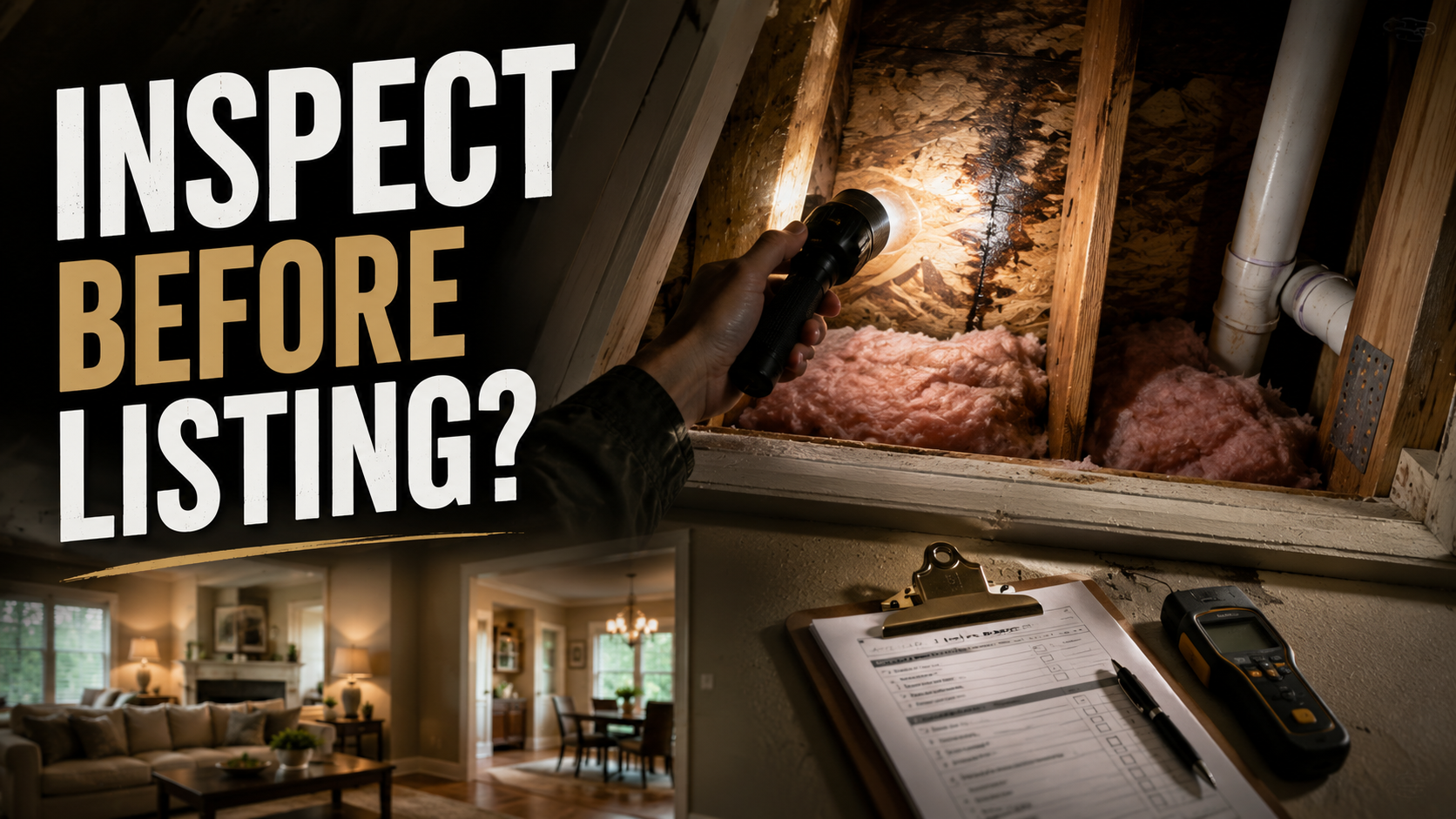
Should Jonesboro Sellers Get a Pre-Listing Inspection?
Should you get a pre-listing inspection before selling your Jonesboro home?
A pre-listing inspection in Jonesboro typically costs $400 to $700 and surfaces issues before a buyer's inspector finds them. It is worth it for older homes, fast-sale priorities, or suspected hidden issues. The trade-off: anything it finds, you have to disclose.
You are a few weeks out from listing. The house feels ready. The repairs you knew about are done. And then someone asks the question every Jonesboro seller eventually hears: "Should we just go ahead and get our own inspection done before we list?"
It is a good question, and it does not have a one-size answer. A pre-listing inspection can save a deal, surface a problem you did not know about, and put you in a stronger position when the buyer's inspector shows up. It can also cost you money, slow your timeline by a week, and create a disclosure obligation you did not have before.
At NEA Realtor Group, Trenton Hoggard and Tim Ray walk Jonesboro and Northeast Arkansas sellers through this decision several times every spring. Here is what a pre-listing inspection actually is, the real case for and against one, what it costs, the disclosure trade-off most sellers do not see coming, and a clear framework for deciding whether it is worth it on your specific home.
What a Pre-Listing Inspection Actually Is
A pre-listing inspection is a home inspection you order yourself, before your home goes on the market. The inspector is the same kind of professional the buyer would hire later, usually certified through the American Society of Home Inspectors (ASHI) or the International Association of Certified Home Inspectors (InterNACHI). Both organizations publish standards of practice that govern what a typical inspection covers.
A standard inspection takes two to four hours on-site. The inspector walks the home and checks:
- Roof and gutters (visible condition, estimated remaining life)
- Attic insulation and ventilation
- HVAC system (age, function, basic operation)
- Electrical (panel, visible wiring, outlets)
- Plumbing (visible piping, fixtures, water heater)
- Foundation, slab, crawlspace
- Doors, windows, walls, ceilings
- Major appliances (operation, not warranty status)
- Exterior siding, soffits, drainage
You receive a written report within 24 to 48 hours, usually with photos and a system-by-system rating. The report is yours, paid for by you, and you decide what to do with it. That last sentence matters more than it sounds, and we will come back to it.
The Case for Getting One Before You List
The strongest argument for a pre-listing inspection is that it pulls forward the surprises. The buyer is going to inspect anyway, and when they do, anything the inspector flags becomes part of a negotiation that happens after they are emotionally invested and after you are already off the market. A pre-listing inspection lets you handle those issues on your own timeline, with your own contractors, at your own pace.
Specific situations where the pros tend to outweigh the cons:
- Older homes (pre-1990) where you genuinely do not know the roof age, the original electrical panel type, or what is going on in the crawlspace
- Homes you have lived in for 15 or more years, where it is easy to stop noticing the things that have slowly drifted
- Sellers who need a fast sale (relocation, military move, estate situation) and cannot afford a deal blowing up at the inspection-response moment
- Homes you suspect have a problem (HVAC sounds wrong, you see a water stain, a door has started to stick), and you would rather know now
- Higher-priced listings where buyers will inspect aggressively and any surprise becomes a bigger renegotiation
A pre-listing inspection also gives you legitimate marketing language. "Pre-listing inspection report available on request" signals confidence and tends to attract more serious buyers.
The Trade-Off Most Sellers Do Not See Coming
Here is the part most articles skip. Once you have a pre-listing inspection report, you know what is in it. And under the National Association of REALTORS® Code of Ethics and the practical realities of standard listing-agent fiduciary duty, anything you know about a material defect must be disclosed to a buyer.
Arkansas itself is a caveat emptor state with no mandatory state seller disclosure statute (we walked through what that means in our recent post on what Jonesboro sellers must disclose before listing). But "no mandatory form" does not mean "no disclosure obligation." Federal lead-based-paint rules under Title X still apply to pre-1978 homes. The voluntary Arkansas REALTORS® Property Condition Disclosure form is widely used. And material-fact disclosure under NAR guidance and your listing agent's fiduciary duty is alive and well.
In plain language: if your pre-listing inspector finds a roof at the end of its life, a slow leak in a vanity, or a foundation crack the inspector classifies as a concern, you cannot pretend you did not see it. You can choose to repair it, credit for it, price for it, or disclose it as-is. You cannot ignore it.
This is not a reason to skip a pre-listing inspection. It is a reason to go in with eyes open. If you would rather not know, the inspection is not for you. If you want the leverage of knowing first and the option to act, it is.
What It Costs and What NEA Inspectors Actually Check
In the Jonesboro and Northeast Arkansas market, a standard pre-listing inspection on a 1,500 to 2,500 square foot single-family home generally runs $400 to $600. Larger homes (3,500+ sq ft), homes with crawlspaces, or homes that need additional services (radon, mold air-quality, sewer scope, well or septic for rural NEA properties) can push the total to $600 to $900 or more. National data from the major inspector associations puts the average single-family inspection in the same range, so what you pay locally is in line with the rest of the country.
What a Northeast Arkansas inspector commonly flags on local homes:
- HVAC age. Arkansas summers are brutal on air conditioning, and an HVAC system at 12 to 15 years old is approaching the end of its life regardless of how well it has been maintained.
- Foundation movement. Much of NEA sits on expansive clay soils that swell and shrink with seasonal moisture, so doors that stick, hairline interior cracks, and small slab settlement are common.
- Roof condition. Composition shingle roofs in the region typically last 18 to 22 years, and storm activity in NEA can shorten that.
- Crawlspace humidity and moisture. Year-round Arkansas humidity means crawlspaces need real ventilation and an intact vapor barrier.
- Older electrical panels. Homes built before the early 1990s sometimes still have panels (Federal Pacific, certain older Zinsco panels) that buyers' lenders flag.
- Septic and well systems on rural NEA acreage, which usually require separate certifications.
When you read the report, ignore the volume. Most reports look alarming because everything is documented, including normal wear. The real list is the items the inspector classifies as safety, structural, or major-system concerns. Those are the items the buyer's inspector will also flag, and those are the items worth thinking about ahead of time.
When It Is Worth It for a Jonesboro Seller
The honest answer is "it depends." Here is the framework we use with sellers in Jonesboro.
Lean YES if:
- Your home is more than 25 years old and you have not done a major systems update in the last five years
- You are aware of a specific issue and want to control how it gets handled
- You need a fast, clean closing (relocation, life event, time-sensitive situation)
- You are listing in the upper end of the local price range, where buyers inspect aggressively
- You have not lived in the home recently (estate sale, rental conversion, inherited property)
Lean NO if:
- Your home is newer (less than 10 to 12 years old) and major systems are documented
- You have done a recent renovation and have receipts, permits, and contractor records
- You are confident there are no hidden issues and the cost feels like a tax on a smooth deal
- You would rather negotiate at the buyer's inspection moment with the contingency clock running than know everything now
A middle-ground option more sellers are using in NEA: a partial inspection. A roof-only inspection ($150 to $250) or an HVAC technician inspection ($75 to $150) addresses the two most common deal-breaking categories without the full report. This is especially useful when you are confident in the rest of the home but want documentation on the systems most likely to come up.
How to Use the Report If You Do Get One
If you decide a pre-listing inspection is the right move, the report only helps you if you do something with it. Three options for each finding:
1. Repair before listing. Best for safety items, code issues, and anything a buyer's lender would force you to fix anyway (active leaks, exposed wiring, broken windows, missing handrails). Get receipts and put them in a folder for showings.
2. Price it in. Best for major-system items where the cost is large and the price reduction is cleaner than the repair (a roof at 20 years old, an HVAC system at 14 years old). Your agent runs comps with this factored in. In the Jonesboro and broader NEA market, comps may need to pull from the last 90 to 180 days because of lower transaction volume, so the math is more art than algorithm.
3. Disclose and credit at closing. Best for items the buyer will likely want fixed but that you do not want to manage yourself (a list of small plumbing leaks, a few cracked tiles, an aging water heater). Disclose upfront, offer a credit, move on.
The biggest mistake we see is sellers who get the report, find one big item, panic, and pull the listing or over-spend on a repair that did not need to happen yet. A good agent walks the report with you and decides which items actually move the deal and which are noise. Trenton and Tim review the report side by side with the seller before any decisions get made, and the decision is almost always less dramatic than the report makes it look.
When the buyer's inspector eventually comes out (and we have a separate piece on preparing your Jonesboro home for the buyer's inspection), you can also offer the buyer your pre-listing report. Most buyer's inspectors will still do their own inspection because that is what their client is paying for, but having your report on the table sets the conversation in your favor. The buyer's inspector tends to confirm rather than dig, and the renegotiation tends to be smaller.
Frequently Asked Questions
Q: Will a pre-listing inspection make my Jonesboro home sell faster or for more money?
It does not directly raise the sale price the way a renovation can. What it does is reduce the chance of a deal falling apart at the inspection-response moment, which is the most common point of failure in residential transactions. For older homes and time-sensitive sales, that translates to a cleaner closing and often fewer days on market.
Q: Can I use the pre-listing inspection report instead of letting the buyer hire their own inspector?
No. The buyer is almost always going to hire their own inspector under their inspection contingency, and they should. Your report is supplemental. Think of it as a head start, not a substitute.
Q: Does Arkansas require me to share my pre-listing inspection report with buyers?
Arkansas does not have a mandatory state-level seller disclosure statute, but once you know about a material defect, NAR guidance and standard listing agreement language obligate you (and your listing agent) to disclose it. You do not have to hand over the entire report, but you cannot pretend you do not know about an issue it surfaced. Talk this through with your listing agent before you order the inspection.
Ready to Decide What Makes Sense for Your Home?
A pre-listing inspection is one of several decisions you make in the weeks before you list. Some Jonesboro homes need it. Many do not. We help you sort that out, run the math both ways, and build a listing plan that actually fits your house. Every NEA Realtor Group listing also includes professional photography, online syndication, and dedicated direct mail to the surrounding neighborhood, the work that drives showings whether you inspect first or not. For perspective, NEA Realtor Group has earned 5-star reviews from buyers and sellers across Jonesboro and Northeast Arkansas, and is the #1 real estate team in the Northeast Arkansas MLS by production.
Connect with NEA Realtor Group
:format(webp):quality(80)/u.realgeeks.media/neahomesearch/team_sidebar.jpg)
:format(webp):quality(80)/u.realgeeks.media/contentcodes2/arrow.png)
:format(webp):quality(80)/u.realgeeks.media/neahomesearch/Market-Report-3.png)